Contemporary · Artist
Asela Abeywardene
Asela Abeywardene works clay the way a ceramicist learns to work it in the end, by giving up a measure of control and letting the kiln finish the argument. She has said that art is freedom and that she looks for absolute freedom in it, and her hand-built ceramic sculpture bears that out: figures that begin in observed likeness and break, part way, into the semi-abstract, so that the finished piece keeps one foot in the recognisable and one in the dissolving.
She grew up in Malabe, close to greenery she has named as an early influence, and came to art seriously in adulthood after a childhood spent drawing, painting and writing verse. Her training runs through the Colombo Academy of Art, where she studied under the sculptor S. Chandrajeewa, and a course in ceramics taken in Dubai, where she lived and worked for a period; she is also a qualified teacher of the Sogetsu school of ikebana, and that Japanese discipline of arranged living material sits behind her feeling for form and negative space. Buddhist philosophy is the frame she returns to most, and the titles carry it plainly: ‘Anitya’, the name of her first sculpture, is the term for impermanence, and her exhibition ‘Sankhara’ takes its name from the idea of formations that arise and pass.
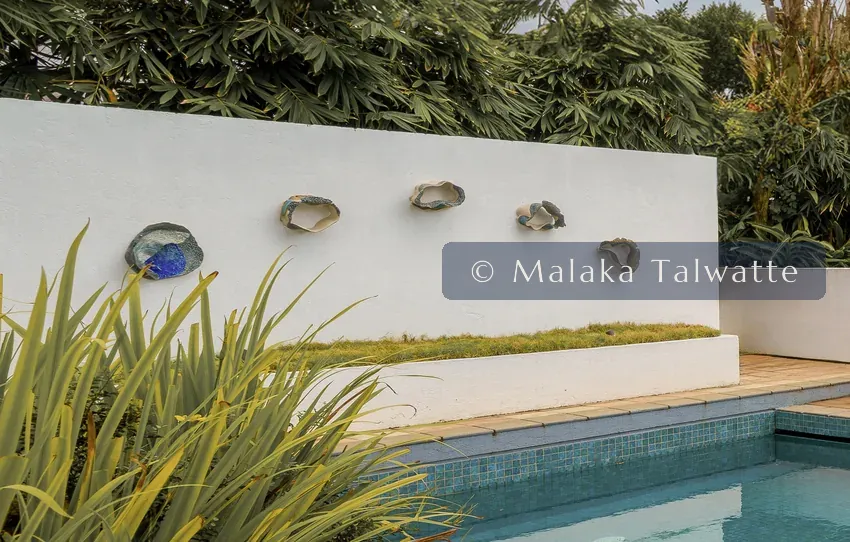
Her exhibitions have been chiefly gallery and online showings in the Sri Lankan ceramic field: ‘Sankhara’ and ‘Imaginarium’ in Colombo, and the online exhibition ‘Ashes to Life’. The body of work is consistent in its concerns, impermanence, nature and the human condition, and consistent in its material honesty about what fired clay will and will not do.
Sources
- Barefoot Gallery, Colombo, artist biography.
- Daily Mirror. Colombo.
How to cite this profile
Malaka Talwatte, “Asela Abeywardene,” Malaka Talwatte: Sri Lankan Art and Ceylon Antiquaria, https://malakatalwatte.pages.dev/artists/asela-abeywardene/.
Quote and cite freely with attribution; please do not republish a whole essay, or a photograph, without permission.