Transitional
Temple painters who took in European perspective and colonial life, and carried the sacred tradition towards the modern. Through the closing decades of the nineteenth century and into the twentieth, the lowland temples fused the old sacred language with European perspective and the dress, theatre and incident of a changing colonial world. The change reached the building as much as the wall, in the pillared and two-storey image houses of the hill country and, on the southern coast, in an ornament that put the European rose in the lotus's place and pressed even the coloniser's coat of arms into Buddhist service. Much of it is anonymous, known by its temples; some carries the first names of the professional painters who took the manner into the Buddhist revival, and on into the art that followed.
“Art is the signature of civilizations.”
Beverly Sills
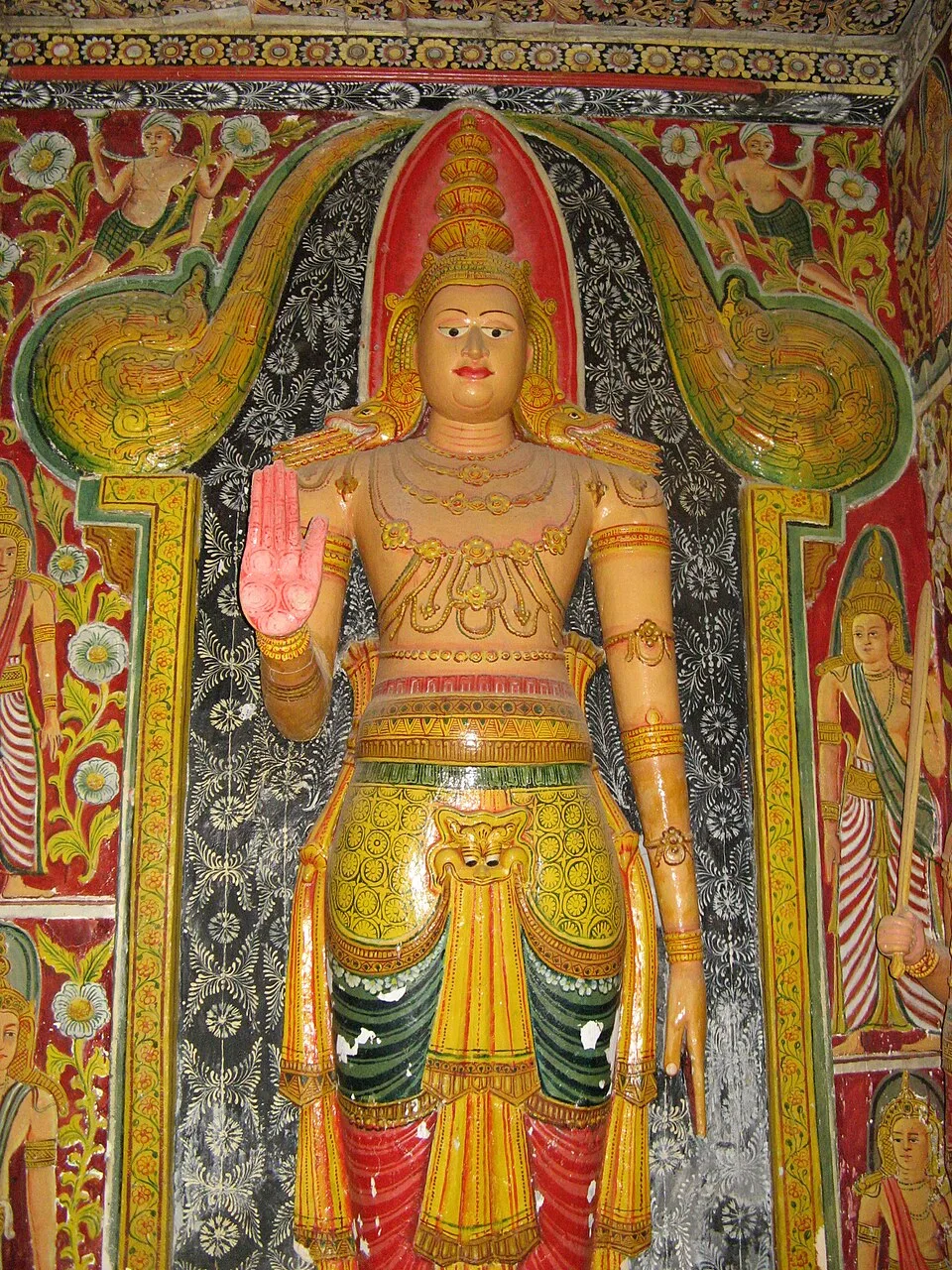 TransitionalIntroduction to this period
- The Transitional Stylec. 1880–1935
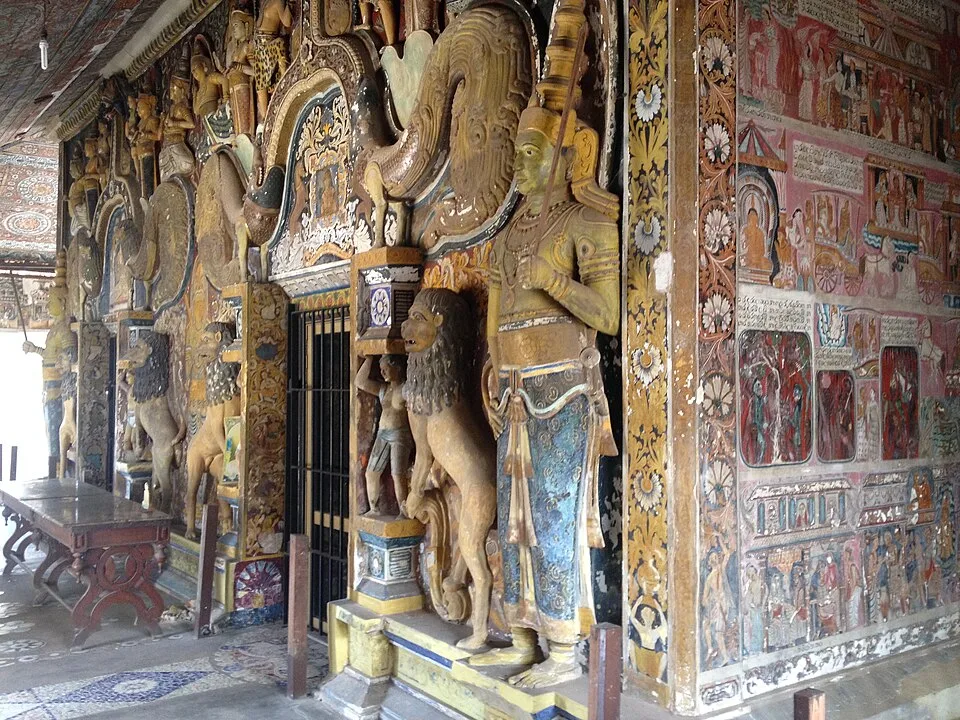 Subhodarama, Karagampitiya1897
- Rankoth Vihara, Panadura1894
- Kataluwa Purvaramac. 1886
- Dodantale19th century
- Attanagoda19th century
- Totagamuwa Subhadraramaya19th century
- Hanguranketa Potgul Vihara19th century
- Richard Henricusfl. c. 1890s–1920s
- The Southern ateliers