Pre-modern · Artist
Charles T. Scowen
Charles Thomas Scowen (1852–1948) was born on 11 March 1852 and reached Ceylon in the early 1870s, having worked as a photographer in Sri Lanka and British India from about 1871. By 1876 he had established a studio, Scowen & Co, at Kandy, and he later opened a second in Colombo; the sources place that second studio variously by 1885 and by the 1890s. His active photographic years are usually given as roughly 1871 to 1890, after which he turned to tea planting and, around the turn of the century, returned to England.
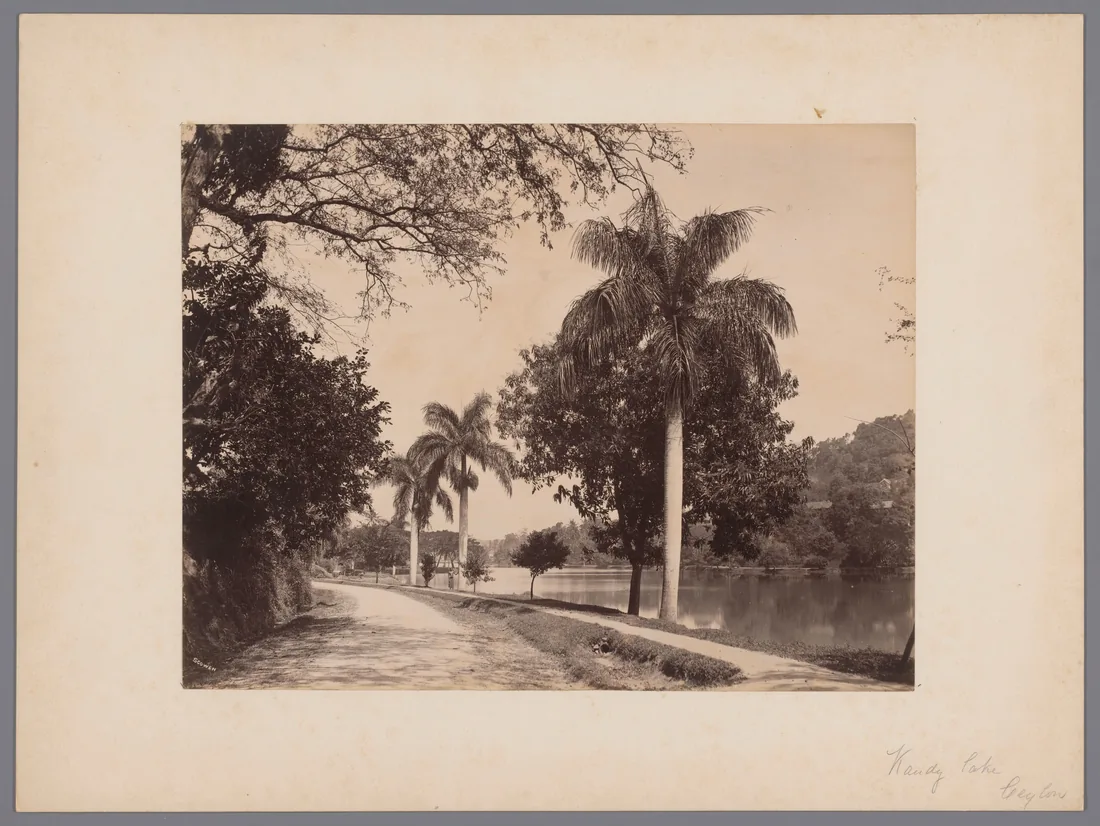
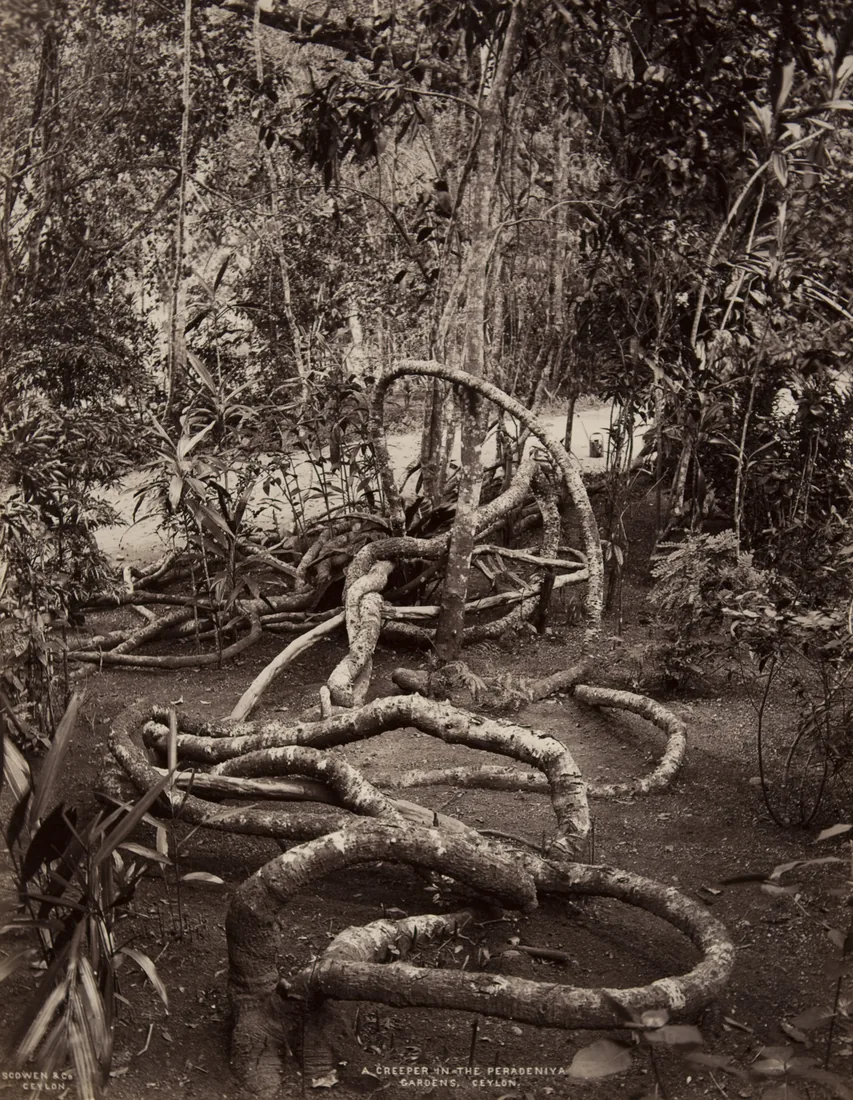
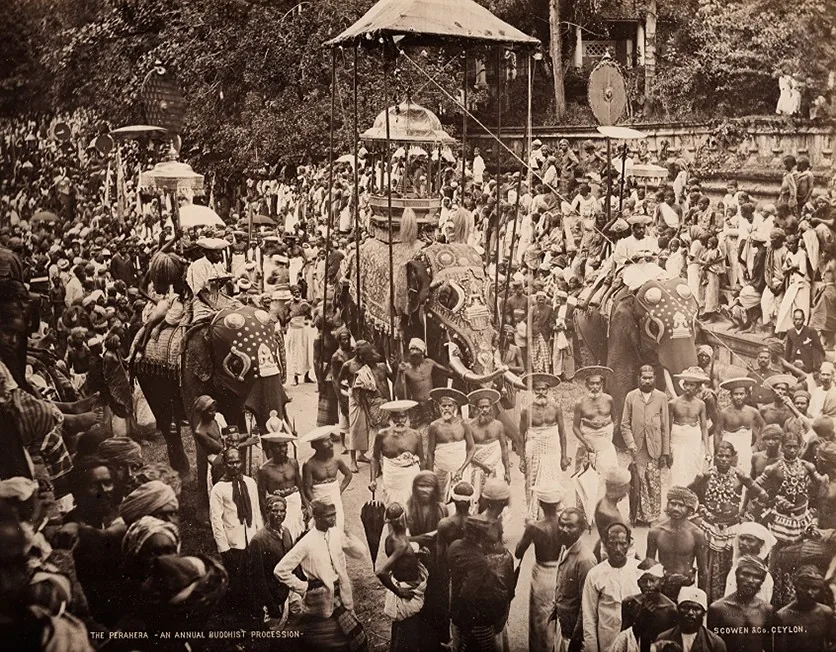
The output of Scowen & Co ranged widely across the colony: landscapes and city views, the ancient ruins of the interior, the plantations and the railway, and portraits of the island’s people made both as studio work and as the marketable ethnographic ‘types’ of the day, among them a series of Malay women. The firm supplied the tourist trade as well as buyers in commerce and industry, and its prints were valued for their lighting, their compositional strength and the technical quality of the albumen printing. Scowen & Co was noted in particular for its studies of the flowers and plants of Ceylon.
When the business wound down in the middle 1890s, its entire stock of negatives passed to the Colombo Apothecaries Company, which reprinted them for the wider market for years afterward, so that images first made by Scowen circulated long under another imprint. Scowen prints are held in a number of major collections, among them the J. Paul Getty Museum, the Metropolitan Museum of Art, Yale University Art Gallery, the Art Institute of Chicago, the Museum of Fine Arts in Boston and the National Galleries of Scotland.
Sources
- Wikipedia. ‘Charles T. Scowen.’ https://en.wikipedia.org/wiki/Charles_T._Scowen
- National Galleries of Scotland. ‘Charles Scowen.’ https://www.nationalgalleries.org/art-and-artists/artists/charles-scowen
How to cite this profile
Malaka Talwatte, “Charles T. Scowen,” Malaka Talwatte: Sri Lankan Art and Ceylon Antiquaria, https://malakatalwatte.pages.dev/artists/charles-scowen/.
Quote and cite freely with attribution; please do not republish a whole essay, or a photograph, without permission.