Start typing to search the essays, the artists and the collection.
Pre-modern · Artist
Constance Frederica Gordon-Cumming
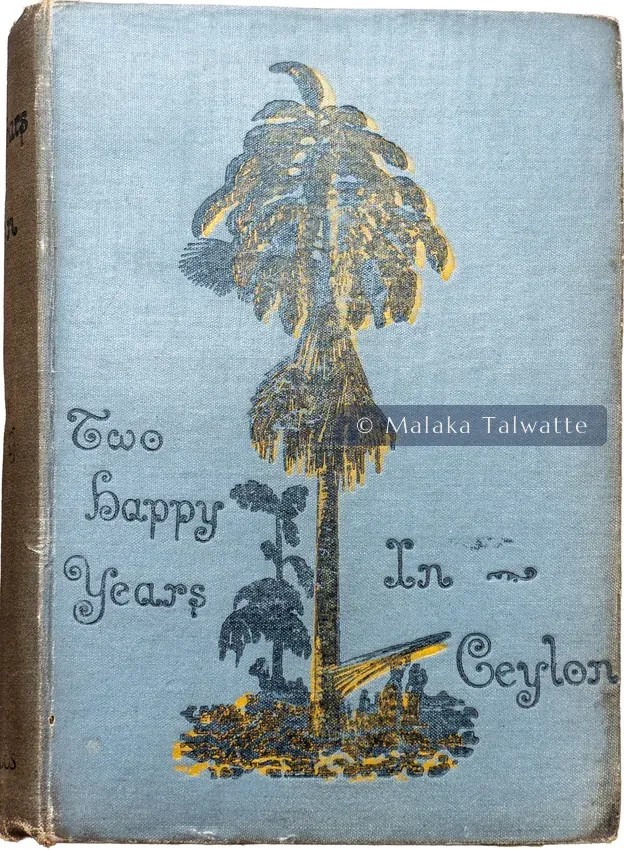
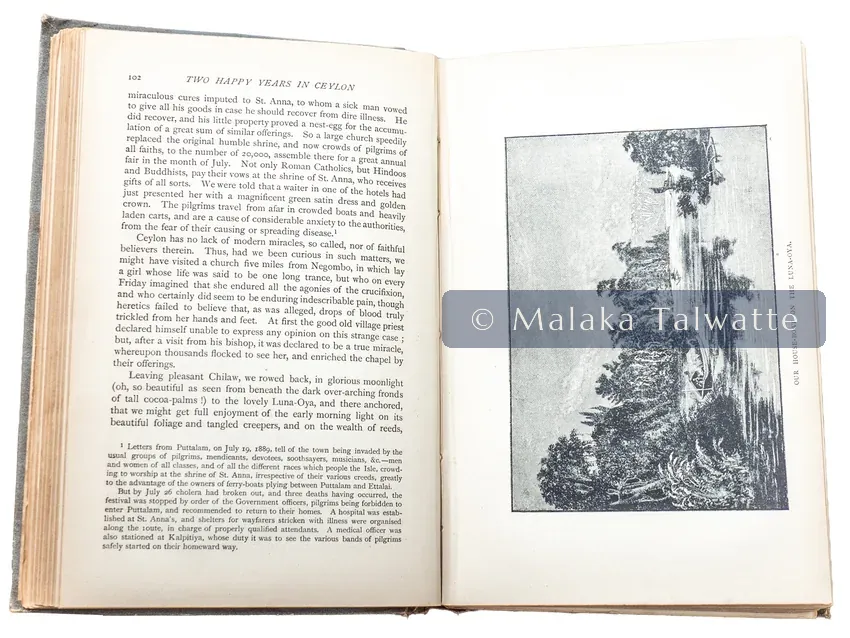
Constance Frederica Gordon-Cumming (1837–1924), known to her intimates as ‘Eka’, arrived at Colombo in February 1873 at the invitation of the Bishop of Colombo, in whose company she travelled the island. The twelfth child of a Scottish baronet, and largely self-taught, she observed the rule of ‘never a day without at least one carefully coloured sketch’, commencing her work each morning at five o’clock. Her brother John had managed a coconut plantation at Batticaloa until his death in 1866, and a visit to his grave upon the east coast was among the most personal episodes of her two years upon the island. She returned to Scotland with several hundred works, executed in watercolour and bodycolour heightened with white, a richer and more opaque technique than simple transparent wash; they were exhibited in London, Glasgow and Liverpool to considerable admiration. Her Two Happy Years in Ceylon, published in 1892 with twenty-five plates from her own hand, is at once a travel memoir, a visual record and a reflection upon the human costs of empire. She was a documented friend and influence of Marianne North, whose gallery at Kew she greatly admired.
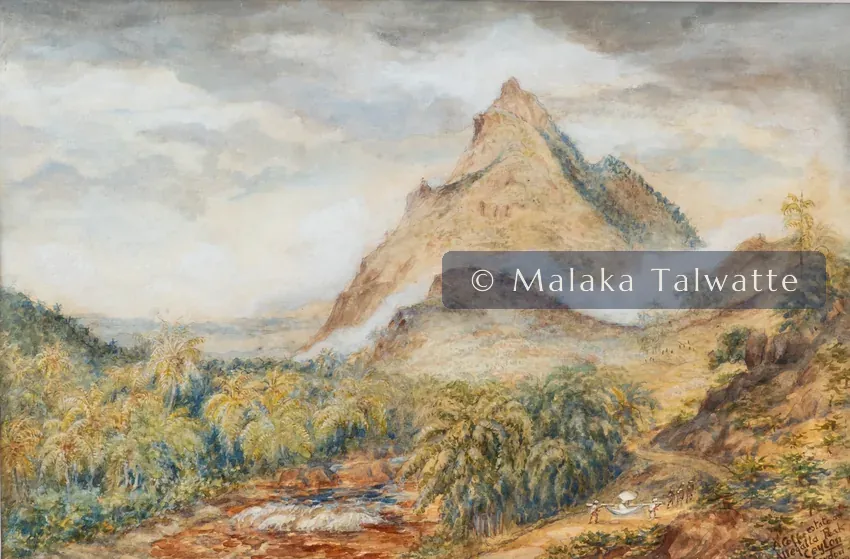
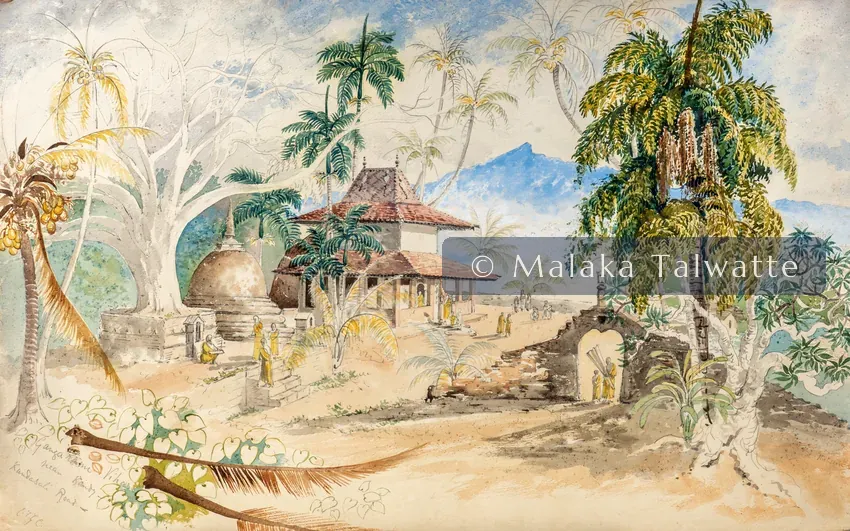
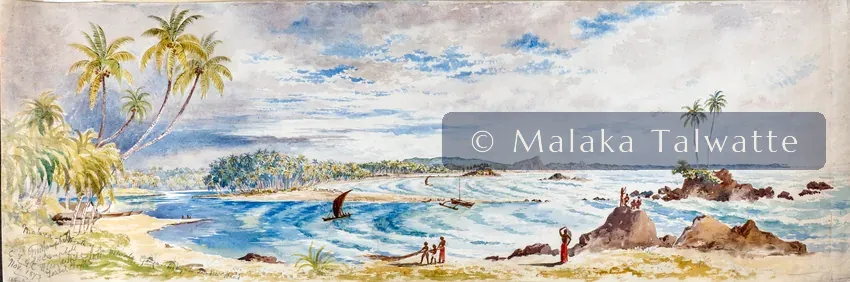
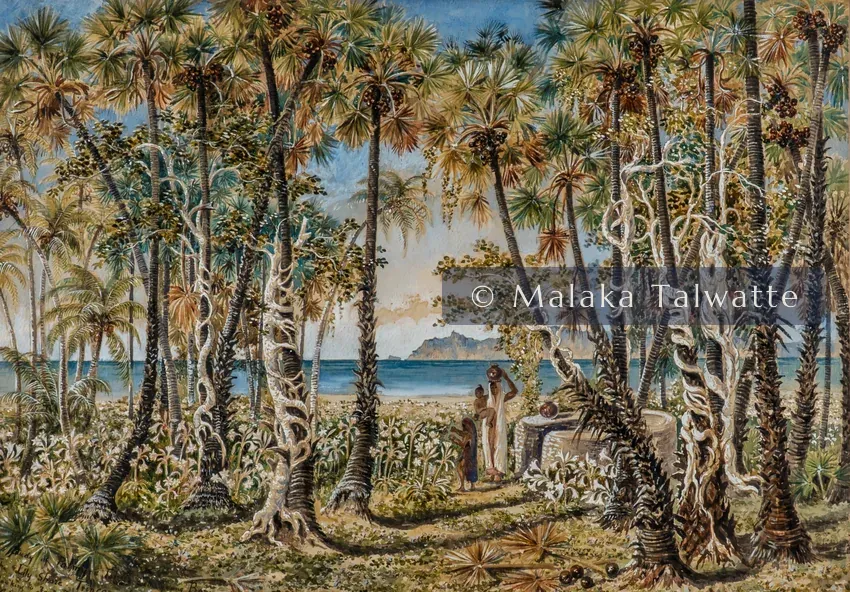
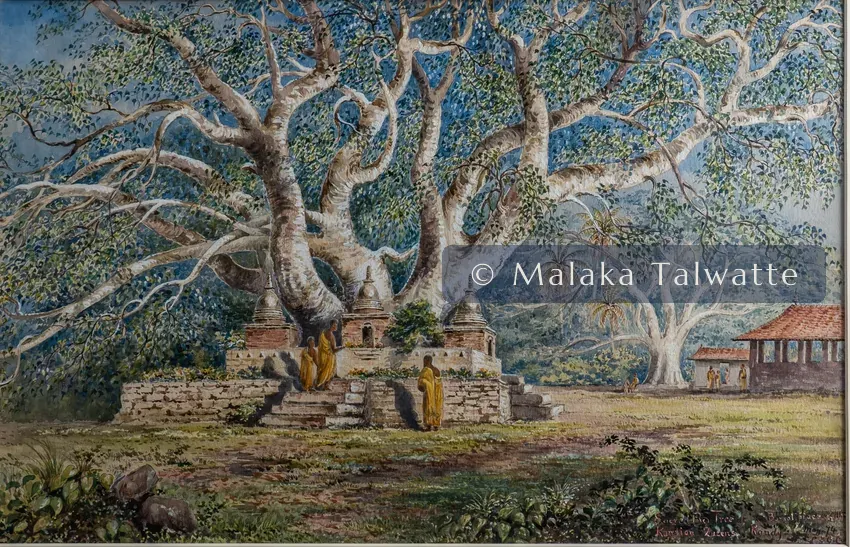
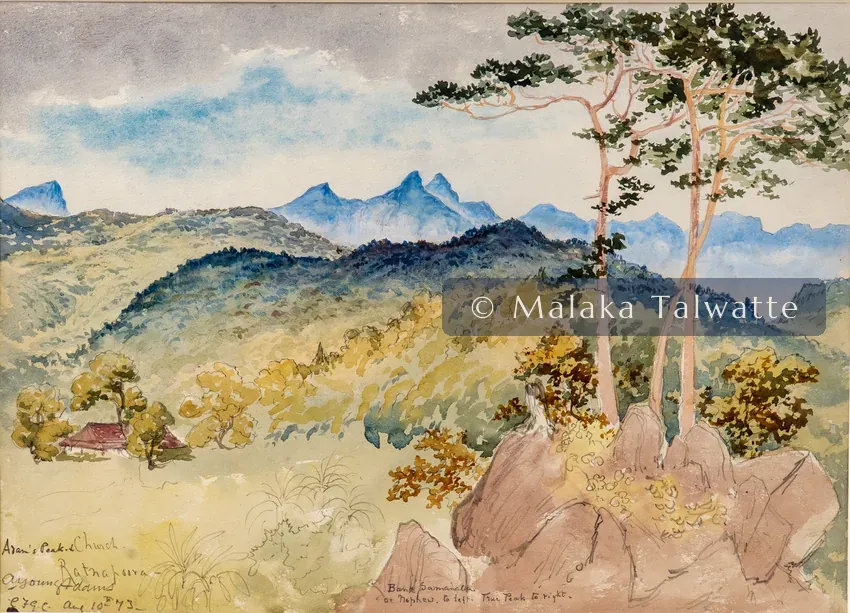
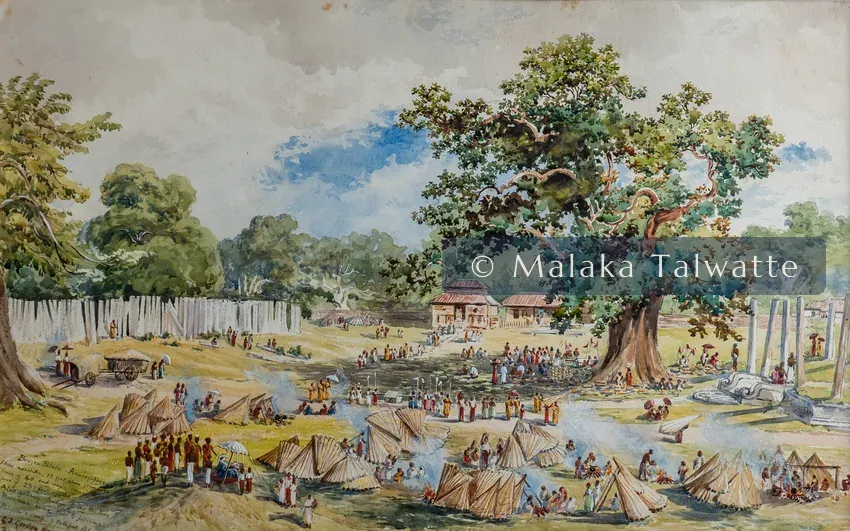
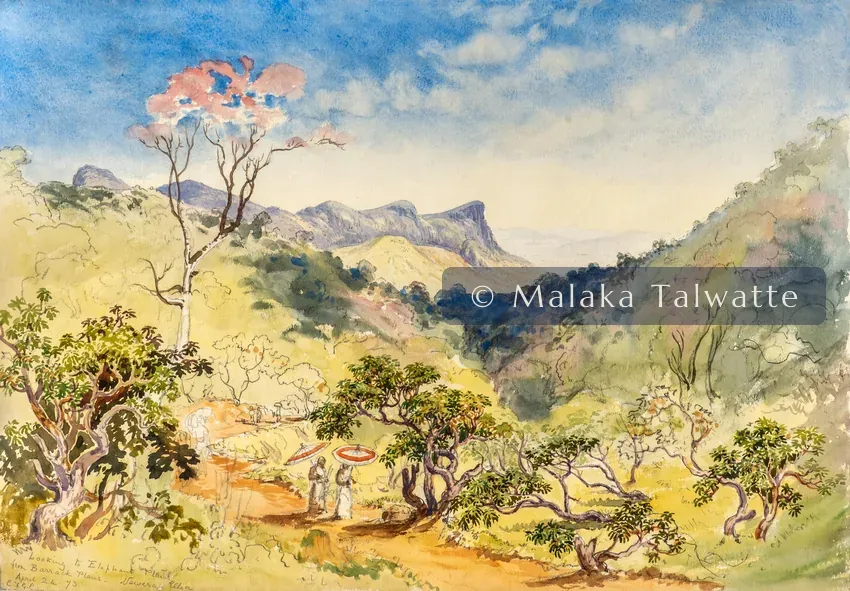
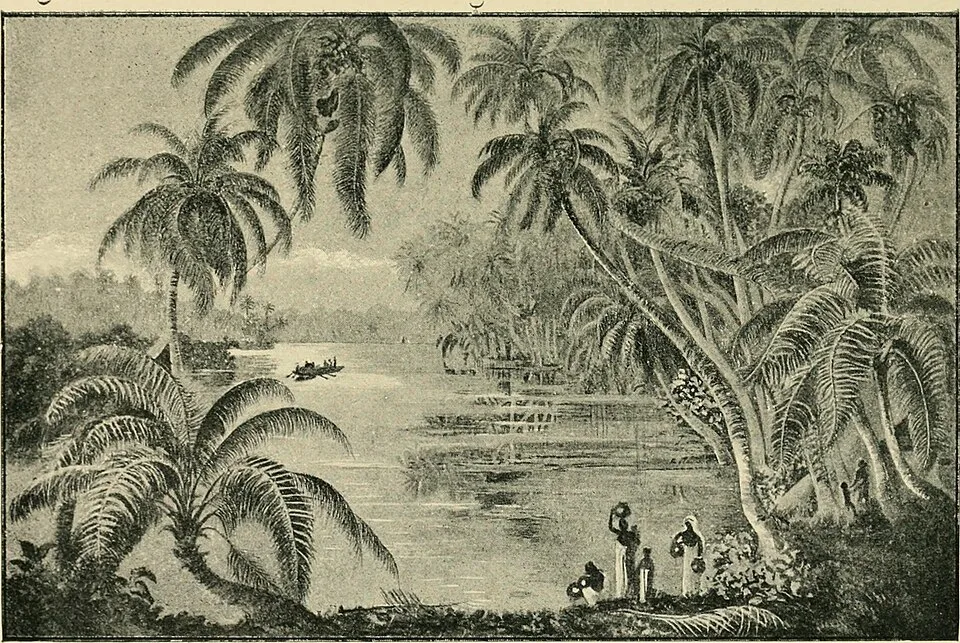
Constance Gordon-Cumming, A Coffee estate at Allegalla Peak, Ceylon, 1873-1874. Watercolour, 27.2 × 41.9 cm, private collection. Returning by rail from Gampola to Kaduganawa station, I was there met by very kind friends, who had brought a chair fastened to bamboos, and a party of luggage-coolies to carry me and my goods to their delightful bungalow (Oolanakanda), perched far up the steep face of Allegalla Peak. The many pleasant days which on several occasions I spent in that sweet home, with its music and flowers and sunny faces, are among my happiest memories of Ceylon. I only wish it were possible for words to convey something of the charm of such surroundings, of majestic crags, clear streams, and fruit-bearing trees, with varied cultivation, chiefly coffee, on the most impossible-looking ground--so steep and rocky ; and all this at such a height that, looking up from the railway far below, one could only imagine an eagle's eerie perched at such a height. One day we climbed to the very summit of the Peak (3,394 feet above the sea), there to inspect a large artificial hollow in the rock in imitation of Buddha's footprint on Adam's Peak. This one is well defined, and makes no pretension to being genuine. It is simply representative, and worshippers who cannot make pilgrimage to the true Sri Pada climb up here, to make their simple offerings, while looking towards Adam's Peak, which rises sharp and clear on the horizon (Cumming, C.F. Gordon. 1893. Two Happy Years in Ceylon. Chatto & Windus, Piccadilly.) Editor's Note - The bottom right of the watercolor depicts Cumming on the chair fastened to bamboo described.Constance Gordon-Cumming, Gangarami Vihara Near Kandy, 1873-1874. Watercolour over pencil, 40.1 × 62.2 cm, the Talwatte Collection. This temple is on the outskirts of Kandy, at Lewella in Mahanuwara, and near the Mahaweli Ganga. It was built around 1750, on the orders of King Kirti Sri Rajasinghe. (CONSTANCE FREDERICA GORDON-CUMMING (1837 – 1924) A LADY OF ADVENTUROUS DISPOSITION. KAREN TAYLOR FINE ART, 2025.)Constance Gordon-Cumming, Matura, Mouth of the Milwale Ganga, Looking Towards Dondra Head, 1873. Watercolour over pencil, 25.4 × 73.7 cm, the Talwatte Collection. Before turning northward to Colombo I wished to see something of the southern coast of the Isle, and gladly accepted an invitation from the same kind friends who had made our stay in Negombo so pleasant, to visit them in a new home at Matara, a most lovely place at the mouth of the Nilwalla Ganga (i.e. the river of blue sand), and only four miles from Dondra Head, which is the southernmost point of the island.' (Cumming, C.F. Gordon. 1893. Two Happy Years in Ceylon. Chatto & Windus, Piccadilly.)Constance Gordon-Cumming, The Lily Shore, Near Trincomalee, 1873-1874. Watercolour, 37.8 × 49.5 cm, the Talwatte Collection. “Within Fort Frederick, beneath the cool shade of large dark trees, there is a most fascinating old well. Two heavy pillars coated with cream-colored chunam, once polished like marble, but now partially stained with orange colored lichen, support a heavy overhanging roof of rounded roof tiles, which are the playground for many squirrels. To a stout rafter is attached a pulley over which passes a long rope; to this is attached the bucket where-with brown men (clothed only in a white waist-cloth and scarlet turban) fill their great red water-pots for domestic use. It is all very pleasant to the artistic sense, though I suppose we must admit that for practical purposes unromantic leaden pipes have their advantages“ (Cumming, C.F. Gordon. 1893. Two Happy Years in Ceylon. Chatto & Windus, Piccadilly.)Constance Gordon-Cumming, Sacred Bo Tree at the Burial Place of the Kandian Queens, Kandy, 1874. Pencil and watercolour heightened with white on paper, 34.3 × 52.1 cm, the Talwatte Collection. Constance Frederica Gordon-Cumming is likely to have arrived in Kandy in late April or early May 1874, having spent a week with Bishop Hugh Jermyn at Pallagolla, before taking a coach to Gampola and onwards by rail. She described Kandy as ‘a beautifully situated little town’ where ‘the vegetation of the hills meets that of the plains, and all the lovely varieties of foliage peculiar to each mingle in rank luxuriance’ (Cumming, C.F. Gordon. 1893. Two Happy Years in Ceylon. Chatto & Windus, Piccadilly.). The Burial Place referenced here is the Asgiri Maha Viharaya, one of two fourteenth-century Buddhist monasteries in Kandy, which contain in their grounds the Sri Dalada Maligawa, or Temple of the Tooth, which houses a sacred relic said to be a tooth of the Buddha. The Asgiri had served as a royal crematorium and burial ground since the late fourteenth century, a tradition that started when Queen Chandravati, mother of the Kandyan King Sena Sammatha Vikramabahu, was cremated and buried there. However, in 1880, the royal burial ground and funerary dagobas were destroyed by the British to make way for a railway line to Matale. (Chris Beetles Summer Show, 2020. Chris Beetles Gallery, London.)Constance Gordon-Cumming, Adam's Peak and Church, Ratnapoora, 1873. Watercolour over pencil, 41.9 × 58.4 cm, the Talwatte Collection. The artist climbed Adam’s Peak ‘a very steep and toilsome expedition’, Memories, p. 212. She refused to be deterred as she had heard of only two European women who had climbed it and made the expedition accompanied by ‘half a dozen stalwart planters’, one of whom was presumably A. Young Adams who signed this work, Memories, p. 212. Her sensitivity to local customs and beliefs is reflected in her account of this view, ‘the [other] great mountain of Ceylon, known to us as “Adam’s Peak” but to the Singhalese as the “Sri Pada’ or Mount of the Holy Foot, because of an impression, six feet in length, on the extreme summit of that lofty peak, which is reverenced by millions of the human race as that of whatever saintly person they most revere. The Buddhists believe it to have been the footprint of Buddha, the Mohammedans of Adam, the Sivites of Siva while the Roman Catholic Christians suppose it to have been that of St Thomas’. (CONSTANCE FREDERICA GORDON-CUMMING (1837 – 1924) A LADY OF ADVENTUROUS DISPOSITION. KAREN TAYLOR FINE ART, 2025.)Constance Gordon-Cumming, The Brazen Palace, Anuradhapura, 1873. Pencil and watercolour heightened with white on paper, 39.4 × 62.2 cm, the Talwatte Collection. The ‘Brazen Palace’, or Lovamhapaya, was an ancient monastery which stood during the city’s glorious past. It was described as being nine stories high, with each side being 400 feet long. The palace was bedecked in corals and jewels, with a roof covered in copper-bronze plates, which gave it its name. Each storey was said to contain 1,000 rooms, and the whole structure sat upon 40 rows of 40 copper-wrapped stone pillars. Though the palace was destroyed in a fire in the first century BC, it was rebuilt, demolished and rebuilt again multiple times, before its final destruction during the city’s fall. The stone pillars which supported the building and appear in Constance Frederica Gordon-Cumming’s watercolour were raised again in the twelfth century and still stand to this day. The small building seen in the centre was a later construction that served as a chapter house for Maha Vihara Buddhists. Gordon-Cumming’s visit to Anuradhapura in June 1873 was likely to have been linked to early attempts to survey the area, as official British interest in the area had only been registered in 1871. She remains one of the earliest British recorders of Anuradhapura, as planned excavations of the site did not begin until 1890. (Chris Beetles Summer Show, 2020. Chris Beetles Gallery, London.)Constance Gordon-Cumming, Looking to Elephant Plains From Barrack Plains, Newera Ellia, 1873. Watercolour over pencil, 35.6 × 50.8 cm, the Talwatte Collection. ‘Nine miles to the north of Nuwara Eliya, at a somewhat lower level, lie the grassy Elephant Plains’. Nuwara Eliya was the hill station to which planters and others retreated from the heat. (Cumming, C.F. Gordon. 1893. Two Happy Years in Ceylon. Chatto & Windus, Piccadilly.)The Talwatte CollectionThe Talwatte CollectionA palm grove by the water, Ceylon (1892), from her Two Happy Years in Ceylon. Source
Sources
Talwatte, Malaka. ‘19th Century Views of Ceylon by British Artists’.
Two Happy Years in Ceylon. 1892.
The Talwatte Collection.
Karen Taylor Fine Art. 2025.
Chris Beetles Gallery, London. 2020.
Gordon-Cumming, Constance. Memories.
How to cite this profile
Source noteExtracted verbatim from Malaka Talwatte, '19th Century Views of Ceylon by British Artists'. Where this page reproduces a previously published essay, cite that original in preference to this page.
Malaka Talwatte, “Constance Frederica Gordon-Cumming,” Malaka Talwatte: Sri Lankan Art and Ceylon Antiquaria, https://malakatalwatte.pages.dev/artists/constance-gordon-cumming/.
Quote and cite freely with attribution; please do not republish a whole essay, or a photograph, without permission.