Kandyan · Site
Degaldoruwa
Degaldoruwa, a cave temple cut into the rock a few miles east of Kandy, holds what is widely judged the finest surviving work of the Kandyan school. Its walls and ceiling were painted by a workshop of four Sittara masters, their foreman Nilagama Patabenda and the most renowned of them Devaragampola Silvattenne Unnanse, the commission begun under Kirti Sri Rajasinha and carried to completion in the reign of Rajadhi Rajasinha that followed. The work was finished by about 1771, or at the latest before 1786, the year of the temple’s own copper-plate grant, the Degaldoruwa Sannasa, which names the four painters and records Rajadhi Rajasinha’s gift of the finished temple into the keeping of his teacher, the monk Moratota Dhammakkhanda Maha Nayaka Thera.
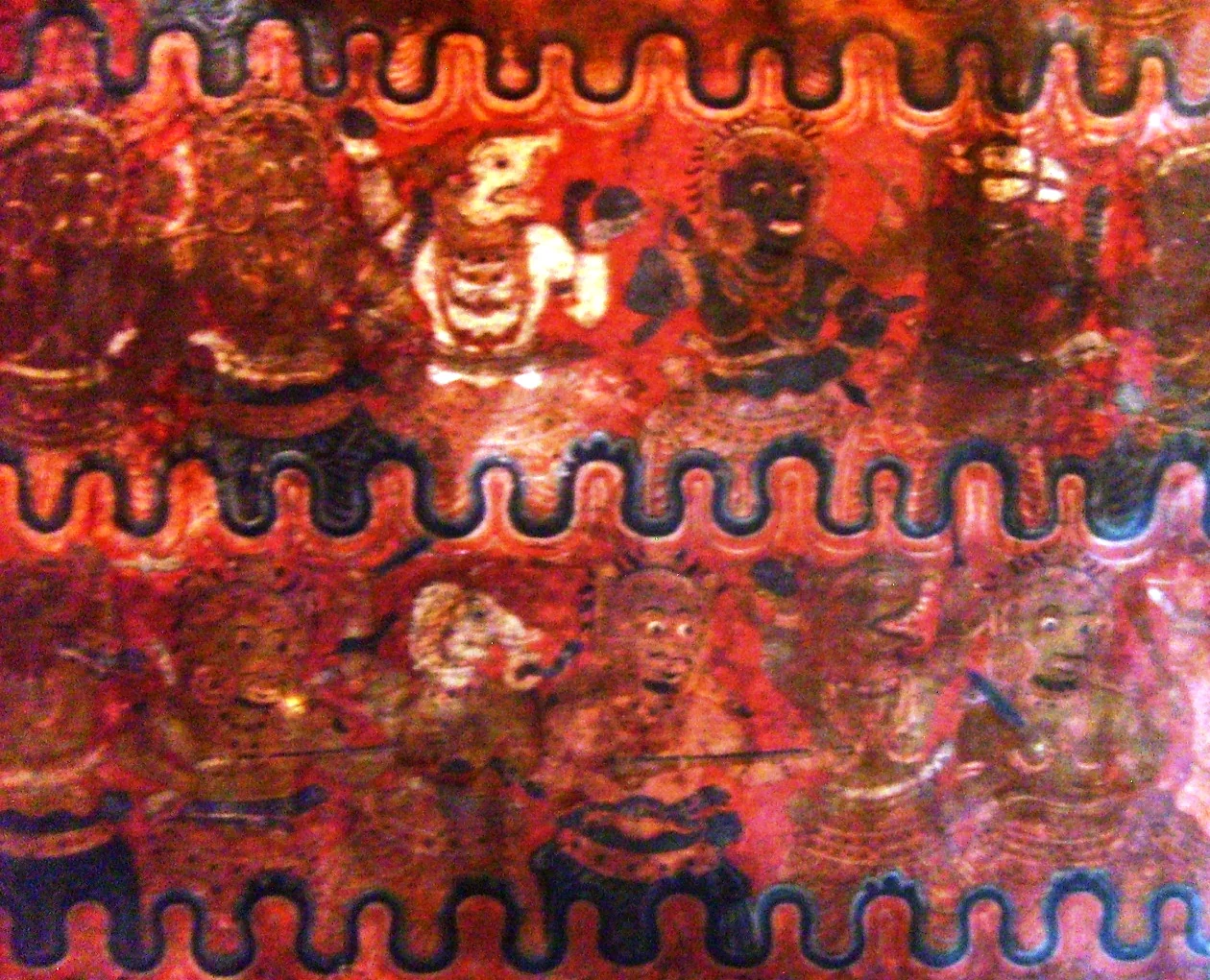
Four Jataka tales, the accounts of the Buddha’s former lives, run across the image house in continuous narrative: the Vessantara, the Sattubhatta, the Mahaseelava, and the Sutasoma, the last painted by Kosvatte Hitaranayide. The painters worked in the device the tradition calls continuous narration, repeating a single figure at more than one point along a register so that the same actor appears twice within one unbroken scene, the viewer rather than the picture expected to move: in the Vessantara story the gifted elephant appears once ridden by the king and again led away by the brahmins who beg it of him. Where Dambulla is vast, Degaldoruwa is whole and exact, a single sustained programme by the tradition’s leading hands, and for that it is often taken as the measure against which the rest of the Kandyan school is set.
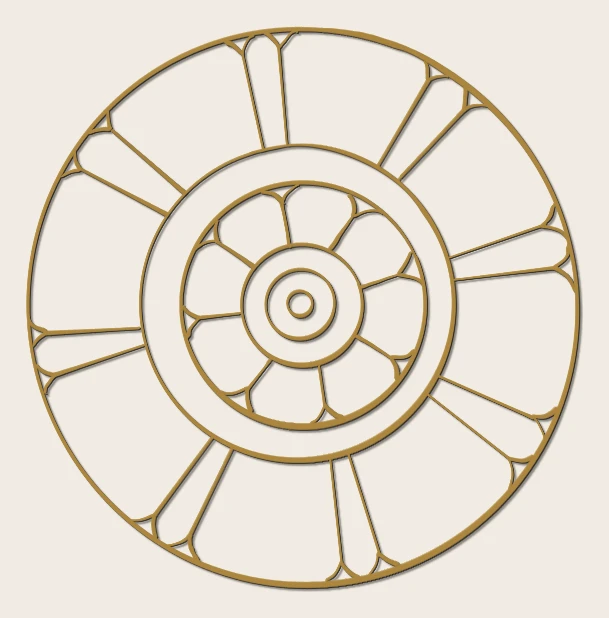
Story-cycles such as these fill the shrine, and it is in the crowd of their incident that the painters’ own century shows itself most plainly. In the ranks of Mara’s demon army, sent to break the Buddha’s meditation, they set muskets in the hands of the attackers, the firearms of colonial Ceylon carried back into a sacred battle, so that the Degaldoruwa walls are read as a record of eighteenth-century Kandy as much as of the Buddhist canon. Several of the narrative scenes are laid on a near-black ground rather than the reds and pinks used elsewhere in the Kandyan school, a darker idiom distinctive enough to be treated as one of the temple’s own signatures, and the walls carry, alongside the figured narrative, dense floral ceiling panels, diamond-lattice grounds gathered round a central rosette, of the same disciplined ornamental vocabulary found across Kandyan temple painting.
The early twentieth-century scholar Ananda Coomaraswamy, who did more than anyone to bring Kandyan painting into serious art history, called Degaldoruwa the best painting he had then seen in Ceylon, and it was substantially on the strength of Degaldoruwa that he made his case for the Kandyan school’s real sophistication, against the received view of his day that it was a minor, provincial art. The temple remains a protected site under the Department of Archaeology, its frescoes conserved through the Central Cultural Fund, a continuing effort against the damp and fading that threaten every painted cave in the island’s wet season.
Sources
- Coomaraswamy, Ananda K. Mediaeval Sinhalese Art. 1908. https://archive.org/details/mediaevalsinhale0000coom
- Manjusri, L.T.P. Design Elements from Sri Lankan Temple Paintings. Colombo: The Archaeological Society of Sri Lanka, 1977.
- Gatellier, Marie. Peintures murales du Sri Lanka: école kandyenne, XVIIIe–XIXe siècles. 2 vols. Paris: École française d’Extrême-Orient, 1991.
- de Zoysa, Asoka, and Vajira Nalinda Jayathilaka. Buddhist Image Houses. Colombo: Samkathana Research Team, 2015.
- Bandaranayake, Senake. The Rock and Wall Paintings of Sri Lanka. Colombo, 1986.
How to cite this profile
Malaka Talwatte, “Degaldoruwa,” Malaka Talwatte: Sri Lankan Art and Ceylon Antiquaria, https://malakatalwatte.pages.dev/artists/degaldoruwa/.
Quote and cite freely with attribution; please do not republish a whole essay, or a photograph, without permission.