Pre-modern · Artist
John Whitchurch Bennett
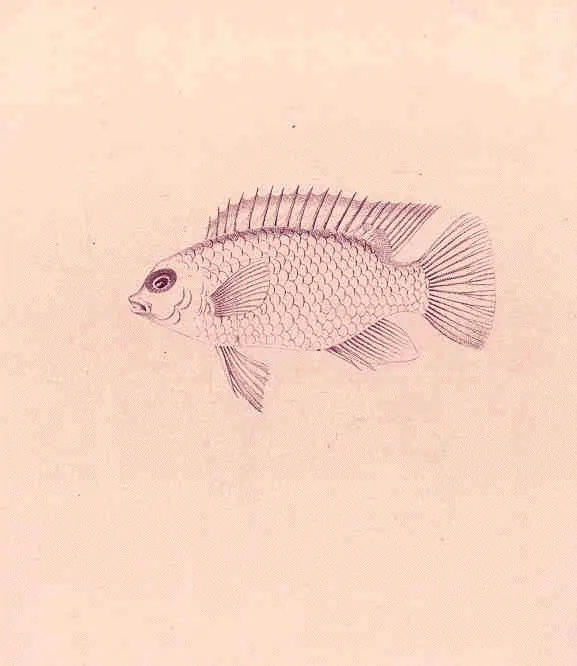
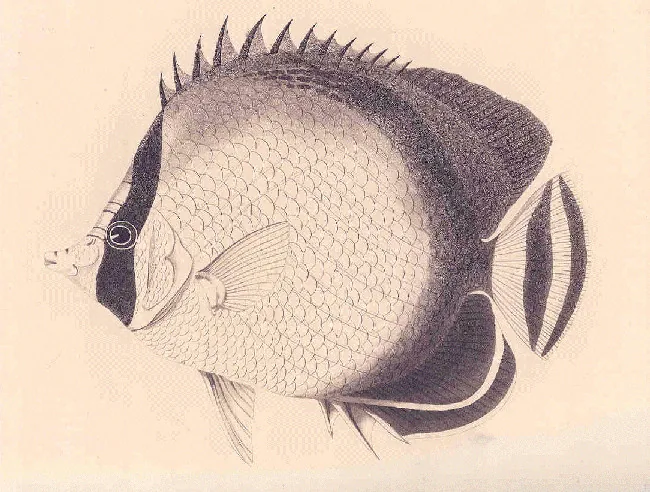
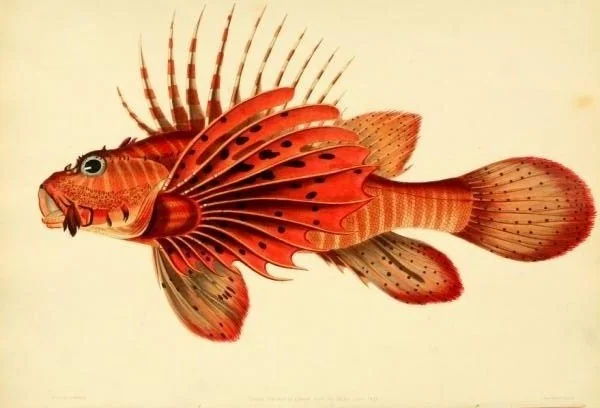
John Whitchurch Bennett (1790–1853) produced, in the thirty hand-coloured plates of A Selection from the Most Remarkable and Interesting Fishes Found on the Coast of Ceylon, one of the earliest coloured records of tropical fish to be published in London. What sets the work apart is its method: Bennett drew from living specimens taken in the southern part of the island, so the plates preserve the colour of the fish as it appeared in the water rather than the faded tones of a preserved skin, and each is accompanied by his own text giving the Latin and the native name, the habitat, and the local use of the fish.
Bennett came to Ceylon as a soldier. Having served in the Royal Marines from 1806 and transferred to the army in 1815, he was posted to the island in 1816 and remained until 1827, taking a civil appointment and, in 1826, the magistracy of the Mahagampattu district, based at Galle and Hambantota on the south coast. It was this long residence in the south that gave him his subjects. He appears to have left Ceylon under a shadow, having been accused of financial irregularity; the record on that point is not wholly clear, and the charge should be treated with due caution. On his return he was elected a Fellow of the Linnean Society in 1829.
The fishes were issued in parts between 1828 and 1830, drawn and hand-coloured by Bennett himself; the plates proved popular enough for further editions in 1834, 1841 and 1851. He afterwards wrote The Coco-nut Palm, Its Uses and Cultivation (1836) and the descriptive survey Ceylon and Its Capabilities (1843), the latter an account of the island’s natural resources and commercial prospects. Copies of the fishes are held today by the Royal Collection and the library of the Royal College of Surgeons, among others.
Sources
- Bennett, John Whitchurch. A Selection from the Most Remarkable and Interesting Fishes Found on the Coast of Ceylon. London, 1830.
- Bennett, John Whitchurch. Ceylon and Its Capabilities. London, 1843.
- Bennett, John Whitchurch. The Coco-nut Palm, Its Uses and Cultivation. London, 1836.
How to cite this profile
Malaka Talwatte, “John Whitchurch Bennett,” Malaka Talwatte: Sri Lankan Art and Ceylon Antiquaria, https://malakatalwatte.pages.dev/artists/john-whitchurch-bennett/.
Quote and cite freely with attribution; please do not republish a whole essay, or a photograph, without permission.