Modern · Artist
Lionel Wendt
In a darkroom off Guildford Crescent in Colombo a print rises in the developer, its tones reversing to silver where the light has been made to turn back on itself, and the man bent over the tray is the one figure at the centre of Ceylon’s first modern movement who never lifted a brush. Lionel Wendt saw; he did not paint. To understand how a photographer came to convene the painters who remade the island’s art, you have to begin with the two worlds that formed him, schooled in Europe and rooted in Ceylon, and with the eye they gave him together.
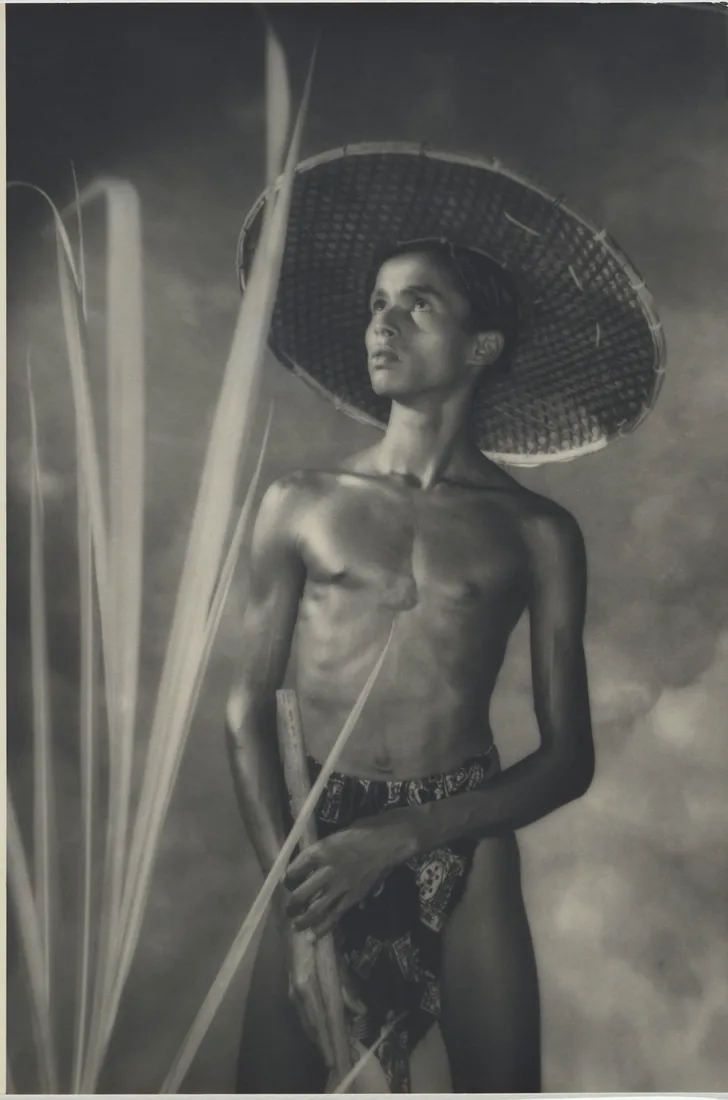
He was born in Colombo on 3 December 1900, into a Burgher family, of the Ceylonese community of part-European descent; his father, Henry Lorenz Wendt, sat as a Supreme Court judge and was a founder of the island’s earlier Amateur Photographic Society. Lionel was sent to England, read for the bar at London’s Inner Temple, and trained as a concert pianist at the Royal Academy of Music under Oscar Beringer, and afterwards with Mark Hambourg in Berlin, with a particular devotion to the piano music of Bartók, and he came home with a European education and a growing conviction that the island’s art had learned to picture itself through borrowed eyes. He gave up law within a few years, and turned his energy instead to music, to criticism, and above all to the camera.
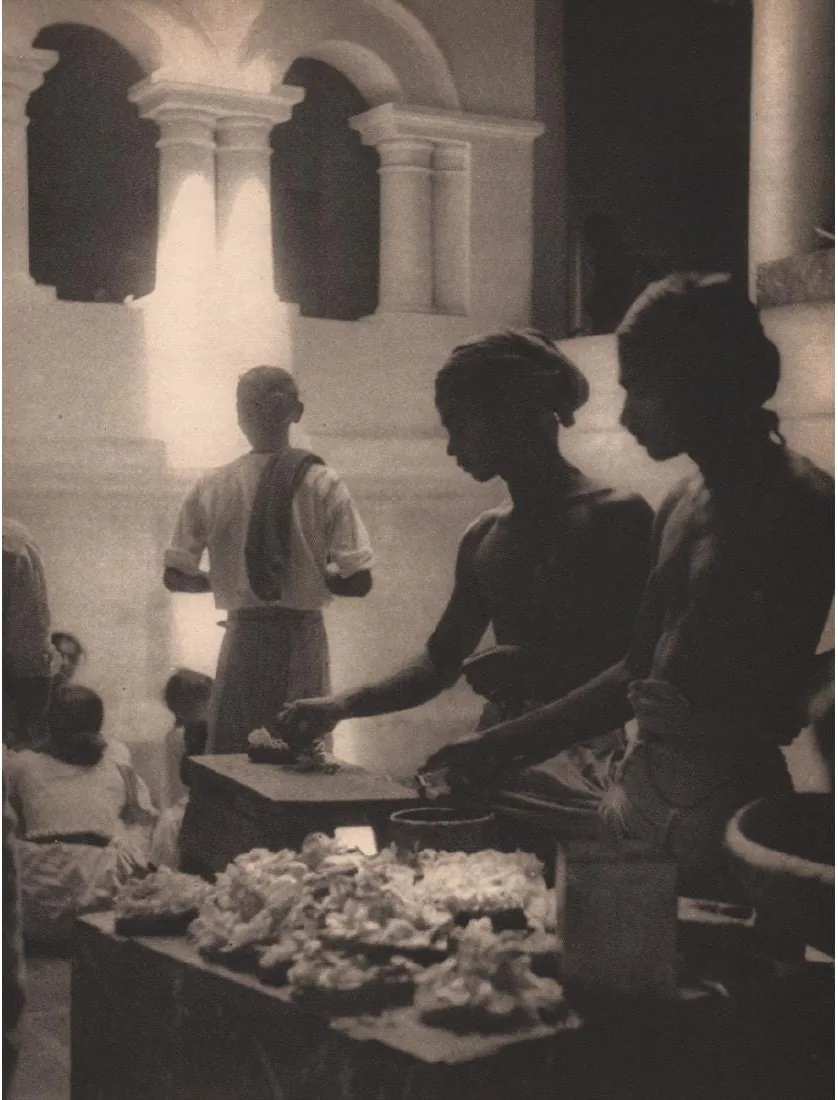
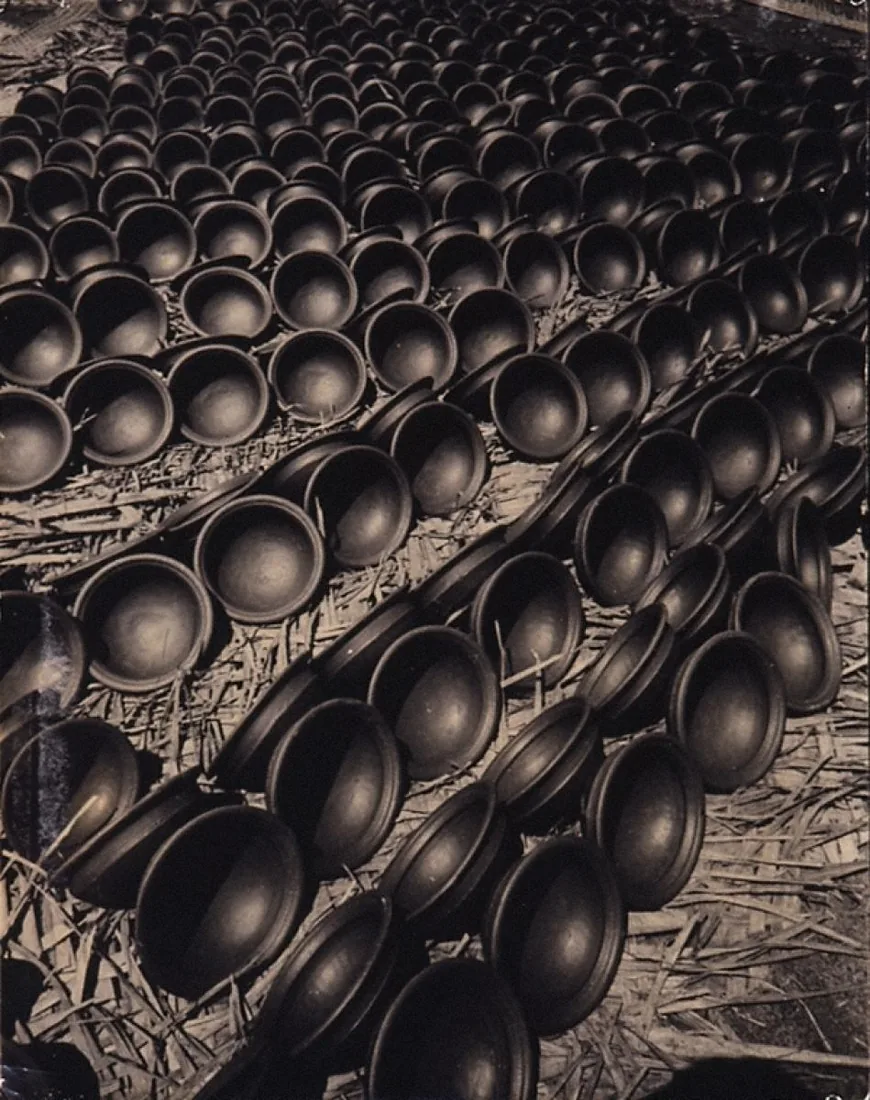
His photographs treated Ceylon as a living culture rather than a colonial picture: a Kandyan dancer preparing his costume for the perahera, the Kandyan drummer Suramba at his work, fishermen and estate labourers, the temple line and the ceremonial mask. He built these images through the full modern repertoire, photomontage, the photogram, double printing and solarisation, so that the documentary subject and the experimental surface held together in a single frame. This was new to Ceylon, where photography had been the trade of the commercial studios, Skeen, Scowen and Plâté, turning out picturesque views and formal portraits for the colonial and tourist market; Wendt was the first to make of it a modern art. In 1935 Wendt, with Bernard Thornley and P.J.C. Durrant, founded the Photographic Society of Ceylon, and in 1938 set up his own Studio Chitrafoto at the invitation of the newspaper proprietor D.R. Wijewardene. Among the pictures he kept largely to himself was a body of male nudes, sensuous and unguarded, made at a time and in a place where such desire was criminalised; they are now counted among the most personal work he made, and examples are held by the Metropolitan Museum of Art in New York. That criminalisation was itself a colonial import, the island’s penal code of 1883, enacted under British rule, making such acts an offence in a statute that long outlived the empire. In 1934 he led the young English director Basil Wright and the GPO Film Unit to the Gal Vihara and the Nittawela dancers for the documentary ‘Song of Ceylon’, lending it his own voice as narrator and taking the Kandyan drummer Suramba with him to London for the recordings; Wright said afterwards that without Wendt, there would have been no film. In 1938 the Leica firm of Ernst Leitz honoured him with a one-man show in London, a distinction it had given only one other living photographer.
The ’43 Group grew out of friendships and collaborations Wendt had formed years before it had a name. When George Keyt was working in a Kandy photographic studio, Wendt sent his own negatives up for him to enlarge, a small collaboration that bound the two men early. He steered the young Ivan Peries towards Harry Pieris for his training, and Geoffrey Beling painted him at his Steinway in a red dressing gown, the portrait that became the Group’s own likeness of its patron. So when the idea for a group came, from Ivan Peries, who put it to Harry Pieris and to Wendt, it was to Wendt that the painters looked, and to his house at Guildford Crescent that they came; the name, the ’43 Group, was his. On the morning of 29 August 1943 they gathered there and it was founded, without a manifesto and in open reaction against the academic Ceylon Society of Arts that had turned so many of them away. Harry Pieris served as its secretary and George Claessen as its treasurer; Wendt stood at the centre as neither, the patron and critic whose eye and whose rooms gave the movement its bearing.
He did not live to see it mature. He died of a heart attack on 19 December 1944, at forty-four. After his death his friend and executor Bernard Thornley had the negatives destroyed, in the belief that disposing of a photographer’s negatives was the ordinary practice when he died; only the prints survived, and his reputation lapsed for decades. It was Thornley himself, with his friend Len van Geyzel, who then gathered the surviving prints into ‘Lionel Wendt’s Ceylon’, brought out for the Lionel Wendt Memorial Fund in 1950. The house he had built at Guildford Crescent became the Lionel Wendt Memorial, still Colombo’s principal art centre and theatre, enlarged after his death to the drawings of his fellow Group member Geoffrey Beling. Into its foundations, when he first raised the house, Wendt had laid a scroll, wishing that ‘all honest endeavour in the service of beauty’ might flourish within it. In 2017 his photographs were shown at documenta 14 in Kassel, carrying the island’s modern eye back into the room where the wider world was looking. The man who never painted had, in the end, taught a generation how to see.
Sources
- Lionel Wendt’s Ceylon. Lincolns Prager, 1950.
- Weereratne, Neville. 43 Group: A Chronicle of Fifty Years in the Art of Sri Lanka. Melbourne: Lantana, 1993.
- Bandaranayake, Senake, and Albert Dharmasiri. Sri Lankan Painting in the 20th Century. Colombo: National Trust of Sri Lanka, 2009.
- Ginwala, Natasha. ‘Lionel Wendt.’ documenta 14. https://www.documenta14.de/en/artists/16244/lionel-wendt
- Wikipedia. ‘Lionel Wendt.’
- de Soysa, Rohan. ’The ‘43 Group: Origins, Aims, Activities and Legacy.’ National Trust of Sri Lanka, 29 September 2016. https://thenationaltrust.lk/wp-content/uploads/2018/06/The-43-Group.pdf
How to cite this profile
Malaka Talwatte, “Lionel Wendt,” Malaka Talwatte: Sri Lankan Art and Ceylon Antiquaria, https://malakatalwatte.pages.dev/artists/lionel-wendt/.
Quote and cite freely with attribution; please do not republish a whole essay, or a photograph, without permission.