For close to fifteen hundred years the seat of Sinhalese kingship stood at Anuradhapura, in the dry plain of the north-central island, and for most of that time it was the holy city of the island’s Buddhism as much as its capital. A thirteenth-century chronicler called it a divine city resting on the terrestrial globe, and the description was not idle: it was here, the tradition holds, that the faith was first planted, here that the oldest of the sacred trees still grows, and here that the Sinhalese raised, in solid brick, among the largest religious monuments built anywhere in its age. The art of Anuradhapura is the ground of everything the island made afterward, and it is known, like the classical age as a whole, less by the hands that made it than by the places that hold it.
The founding and the faith
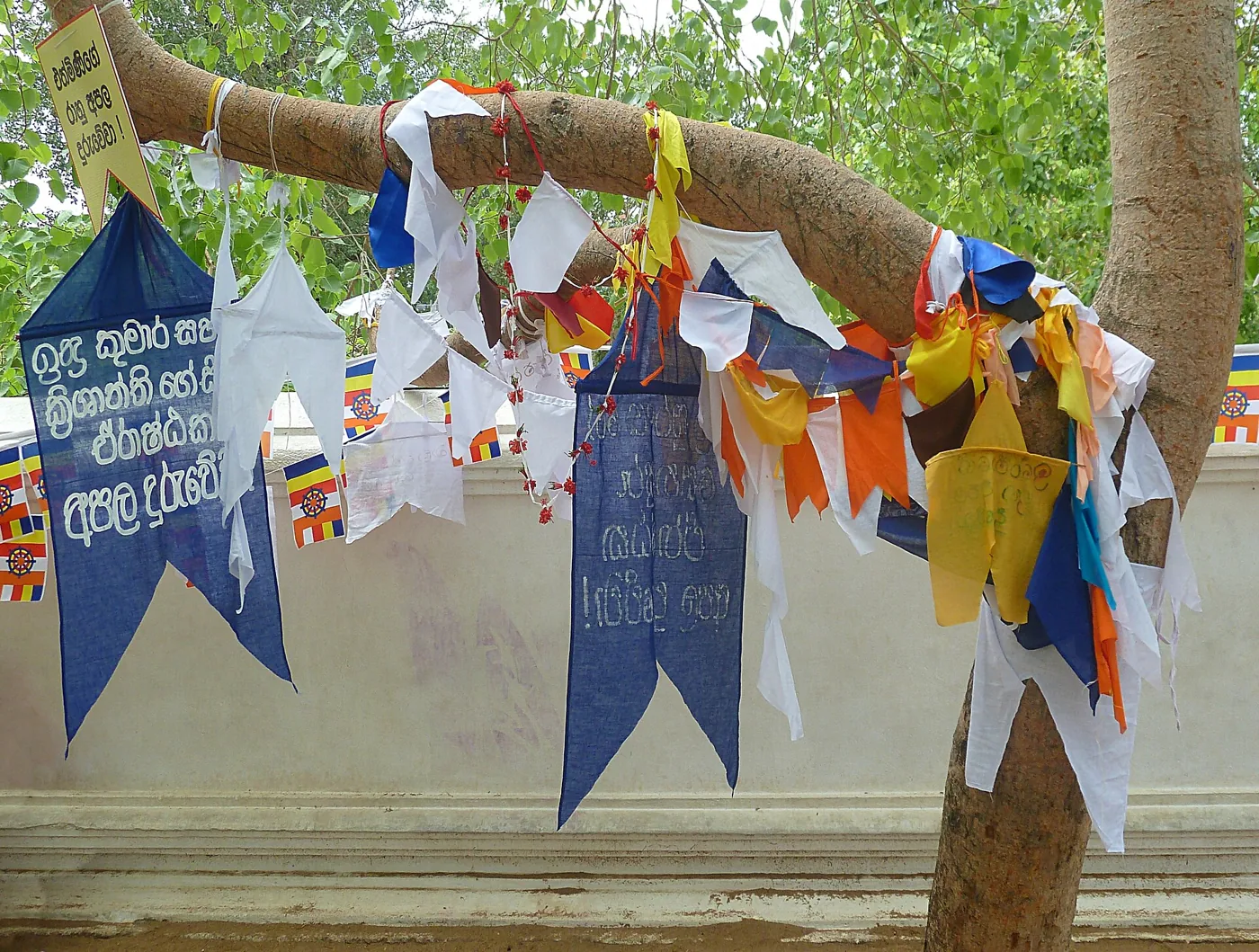
The city takes its beginning from Pandukabhaya, a king of the fourth century before Christ who laid it out with its reservoirs and its quarters for the different peoples and trades. Its greatness, though, begins with the coming of Buddhism. In the reign of Devanampiya Tissa, in the middle of the third century before Christ, the monk Mahinda, a son of the emperor Asoka of India, is said to have met the king on the hill of Mihintale east of the city and won him and his court to the new faith. What Mahinda brought was carried on soon after by his sister, the nun Sanghamitta, who by tradition bore from Bodh Gaya a cutting of the very tree under which the Buddha reached his enlightenment. Planted at Anuradhapura in the third century before Christ, the Sri Maha Bodhi grows there still, tended without a break across more than two thousand years, the oldest tree on earth whose planting is set down in a written record. Around it grew the eight great places of pilgrimage, the atamasthana, and the city became the first of the island’s sacred sites and the pattern for the rest.
The great stupas
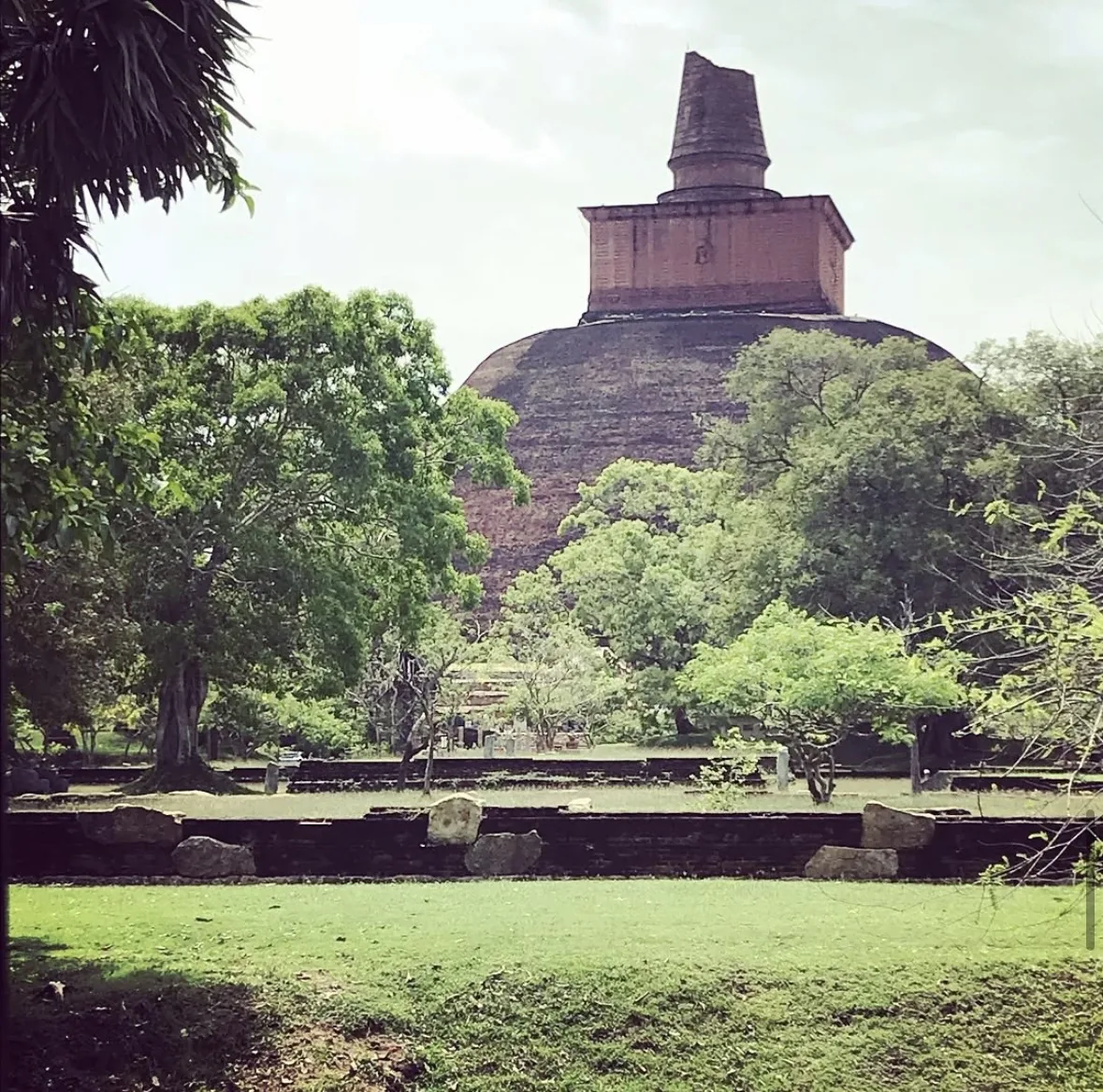
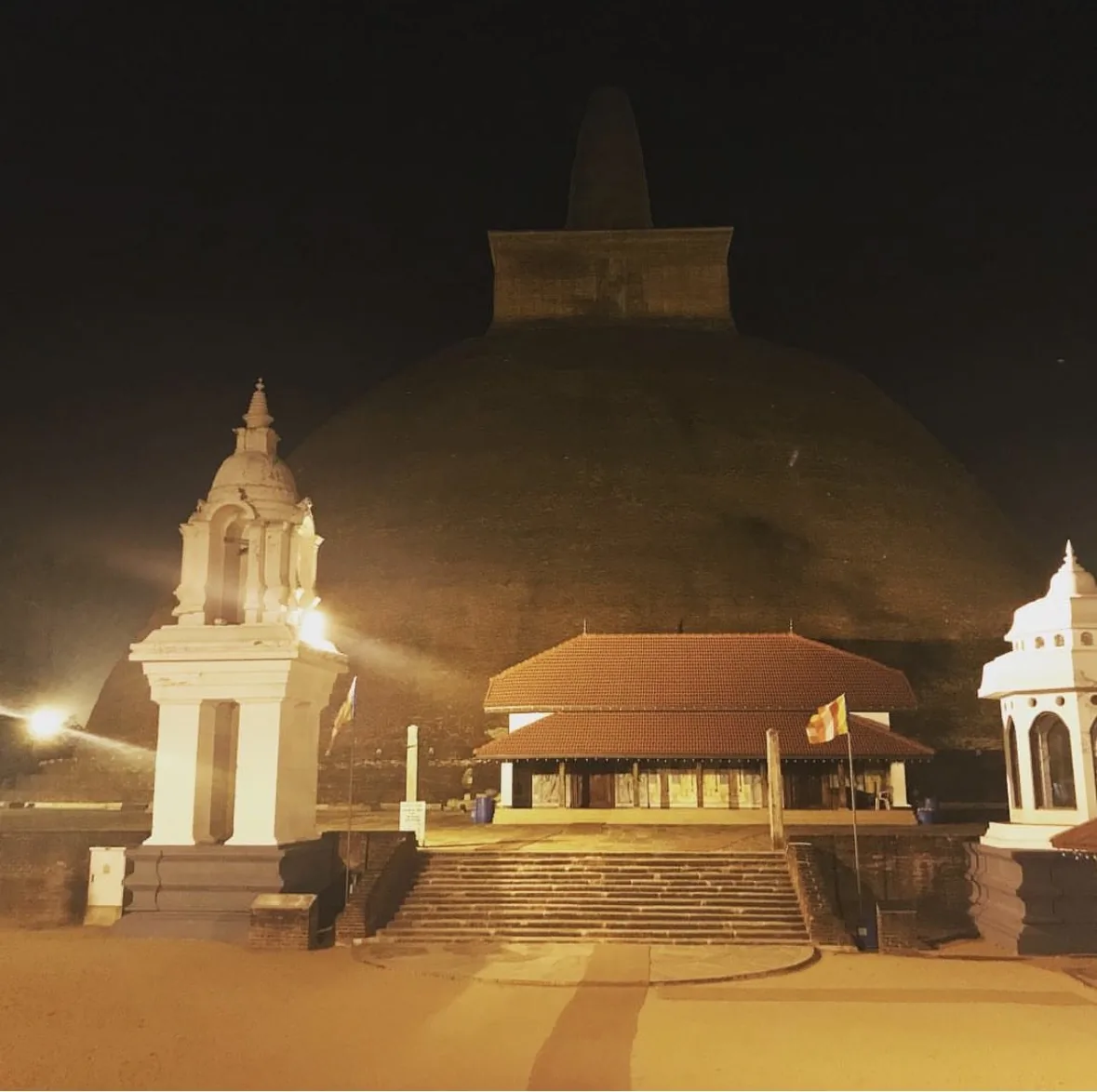
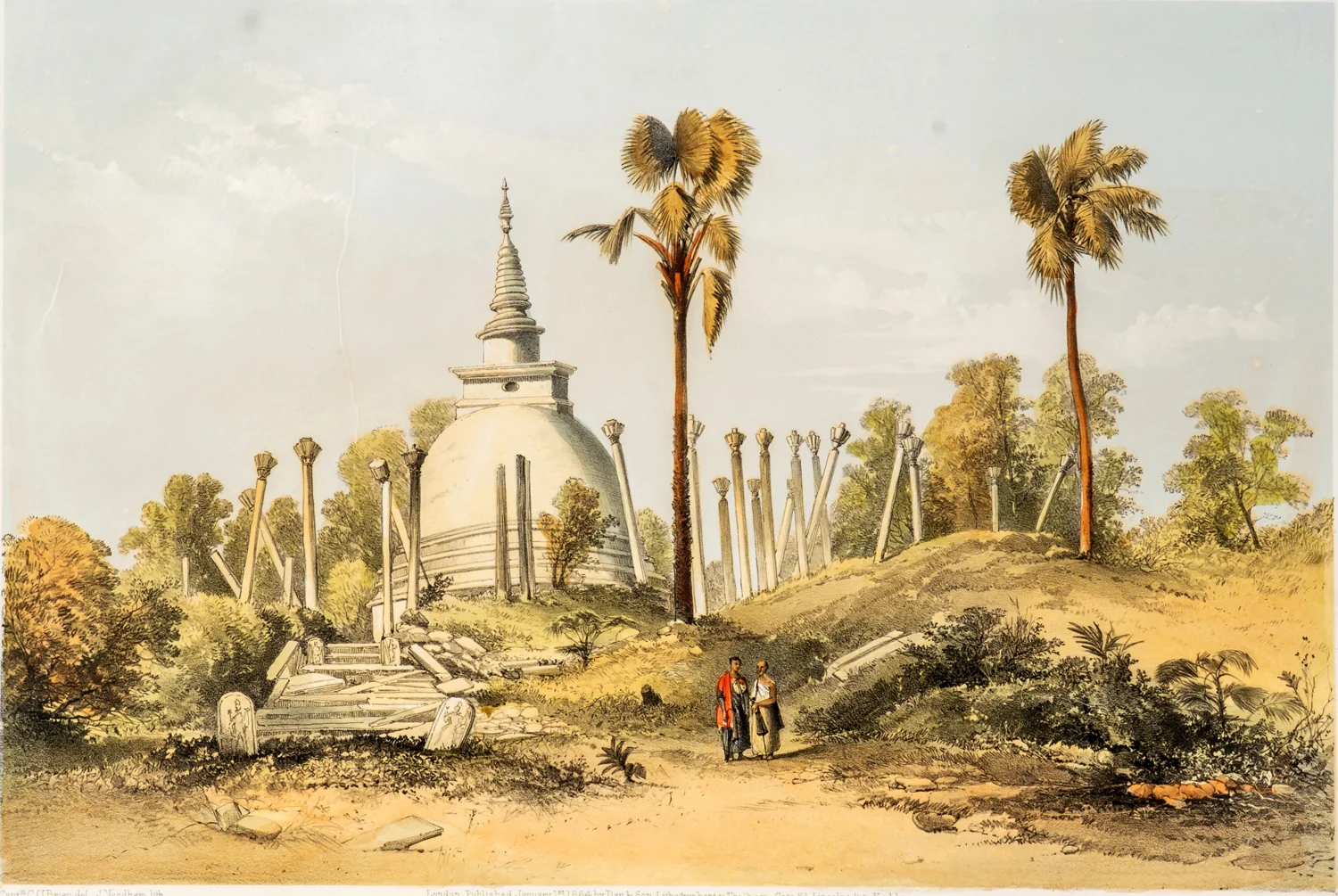
The most visible art of Anuradhapura is its stupas, the dagaba, the solid dome of brick raised over a relic of the Buddha. The first was the Thuparama, built by Devanampiya Tissa to enshrine the Buddha’s collarbone relic, and after it the form was raised to a size that few monuments anywhere have matched. King Dutthagamini, who ruled in the second century before Christ and drove a Chola occupation from the city, built the Ruwanwelisaya, the great stupa also called the Mahathupa and the Ratnamali, the necklace of gems; the Thupavamsa, the chronicle of the stupa, records its building in detail, the relics enshrined within it and the service-groups of scribes, painters and dancers set to attend it. Grander still in the end were two later foundations: the Abhayagiri, raised by Vattagamani Abhaya in the first century before Christ, and the Jetavana, by Mahasena in the third and fourth centuries after Christ, whose brick dome rose above a hundred metres and was, for its age, the tallest work of brick raised anywhere on earth, a mass of masonry that only the great pyramids of Giza then surpassed.
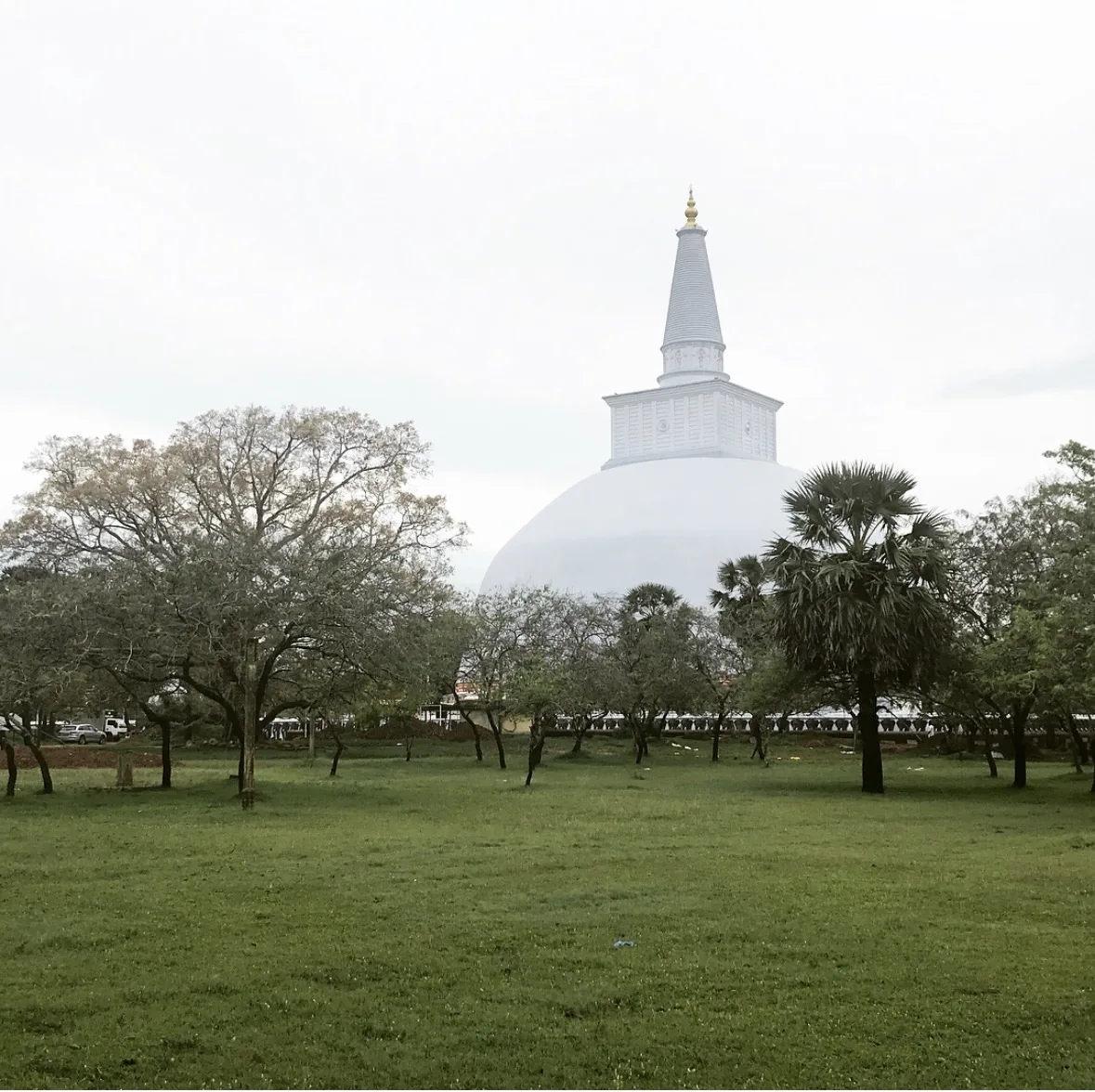
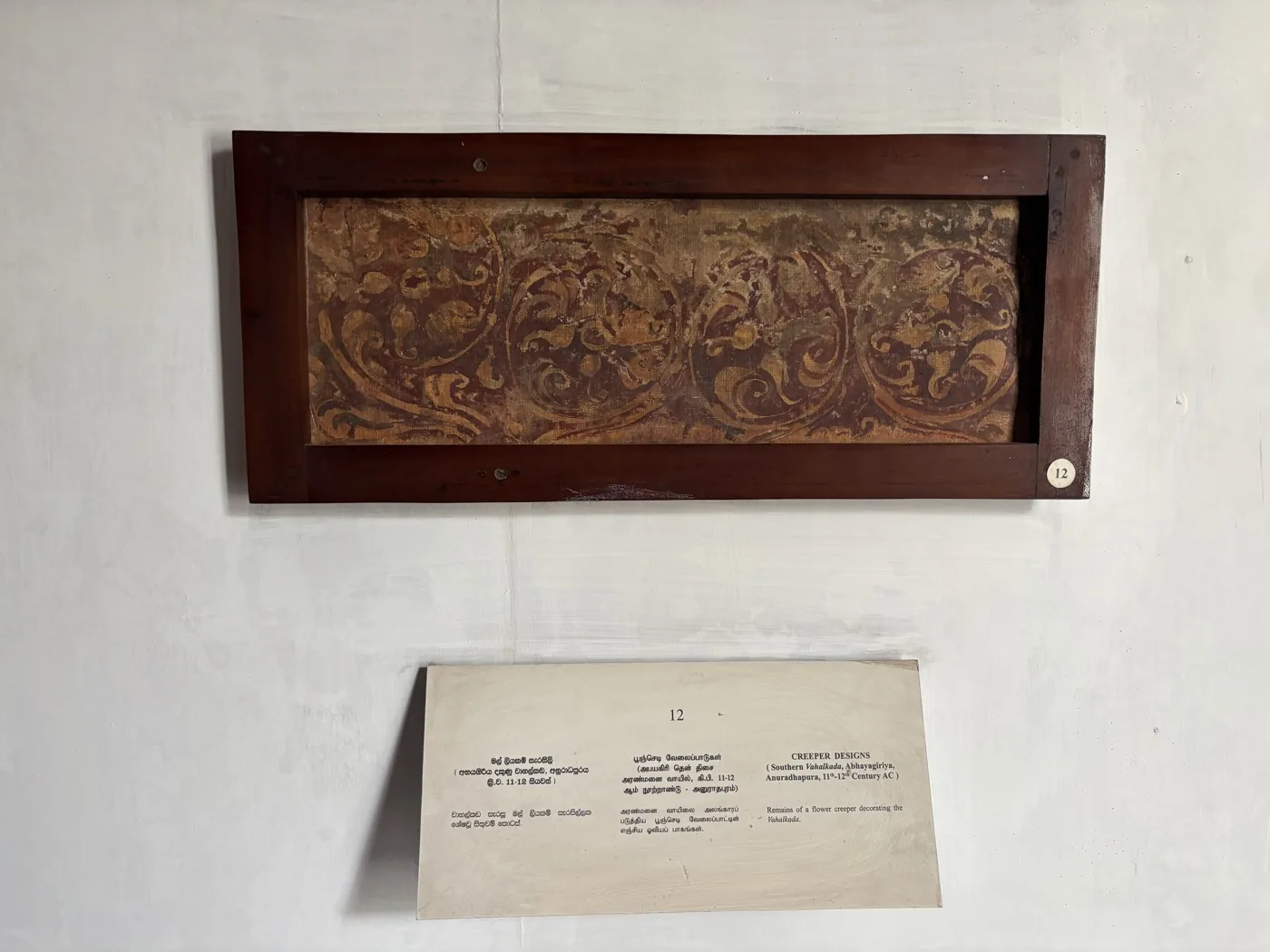
The building of such domes was an engineering art as much as a religious one. The Sinhalese gave the great stupa a subtly swelling, ellipsoidal profile rather than a plain hemisphere, and carried it on a core divided into zones of differently laid brick, so that the enormous mass would settle evenly and the outward thrust be contained. The brick was set in a fine clay mortar, the so-called butter-clay, and the whole was plastered and lime-washed white. At the four cardinal points stood the vahalkada, the projecting frontispiece faced with carved stone, a feature that reached its finest form in the second century after Christ, in the reign of Kanittha Tissa, and that carries the mark of the Andhra country of southern India, where the great stupas of Amaravati and Nagarjunakonda stood. The white was not the whole of it. The frontispieces and the mouldings were painted, and fragments of that lost colour cling still to the vahalkada and the base-mouldings at the Ruwanwelisaya and the Mirisavetiya, the last of a decoration that once ran bright over the plastered stone.
The three fraternities
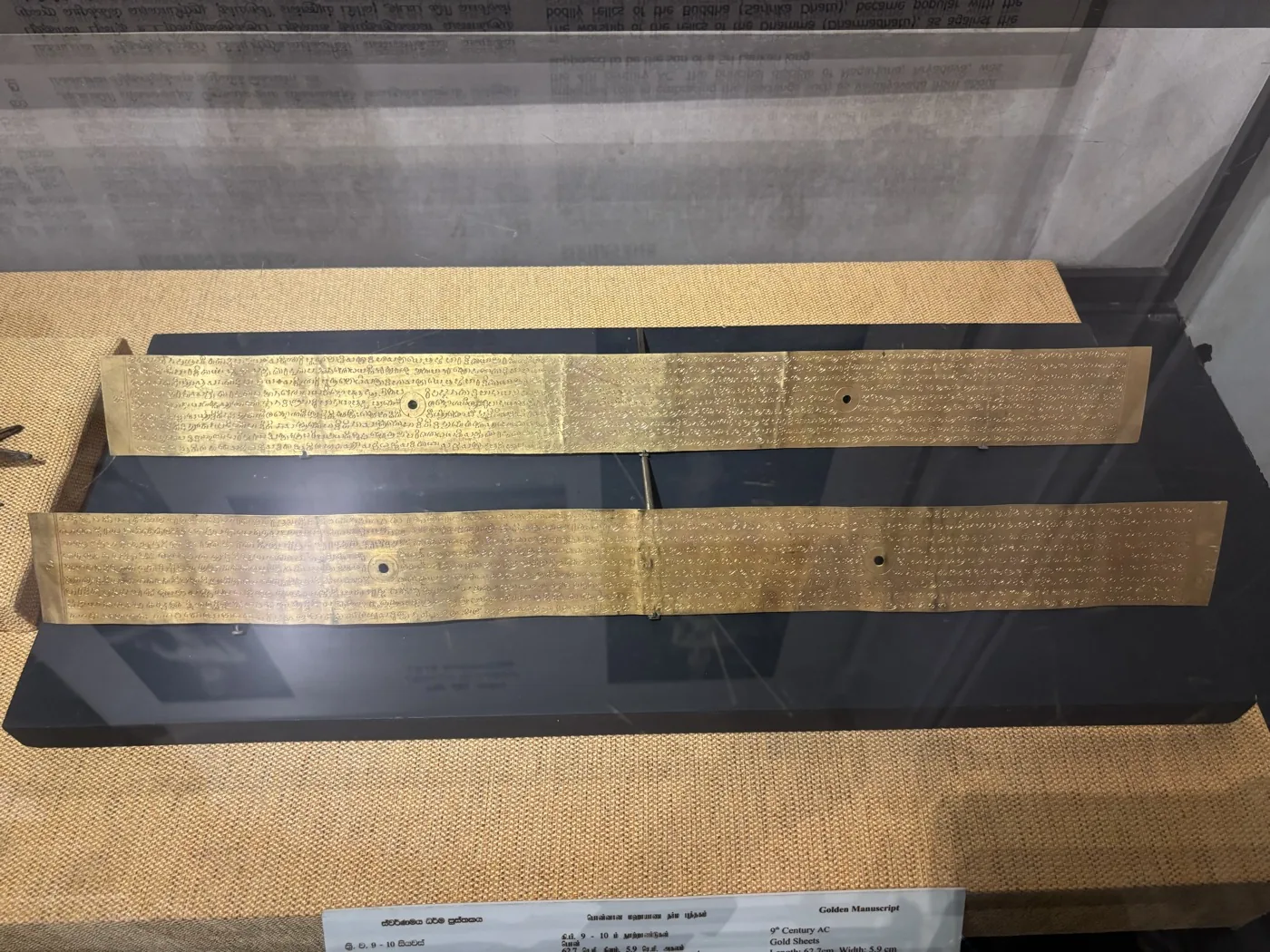
The stupas were the centres of great monasteries, and the monasteries were the powers of the city. Three of them came to divide the island’s Buddhism between them: the Mahavihara, the oldest and the guardian of the orthodox Theravada; the Abhayagiri, which grew into a vast and cosmopolitan establishment open to the newer currents of Indian Buddhism; and the Jetavana, younger than the other two. The rivalry among them ran for centuries, and it was to end just such a quarrel that a later king at Polonnaruwa would call the council recorded on the rock of the Gal Vihara. The Abhayagiri in particular reached far beyond the island: the Chinese pilgrim Faxian, who stayed there at the opening of the fifth century, counted its monks in the thousands, and the monastic city at its height is said to have held as many as twenty thousand in all, and the ground has since yielded the material proof of its Mahayana leanings, gold plates inscribed with the Prajnaparamita, the perfection of wisdom, a bronze vajra and other objects of a Buddhism the Mahavihara did not own. Around these three ran the lesser monasteries and the pirivena, the teaching colleges, and the forest hermitages of the ascetics, so that the whole city was given over to the religious life more completely than we can now easily picture.
The sculpture
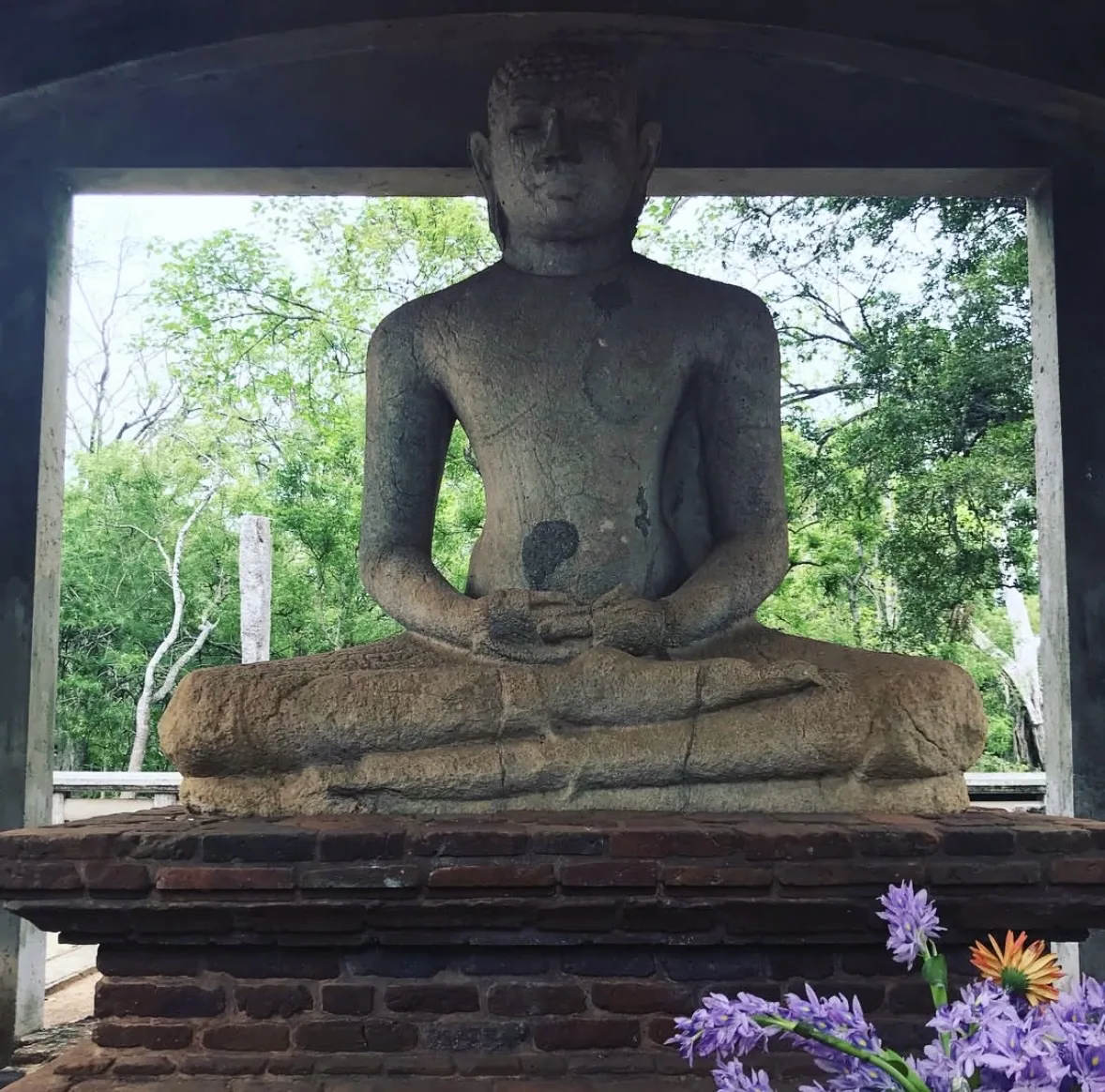
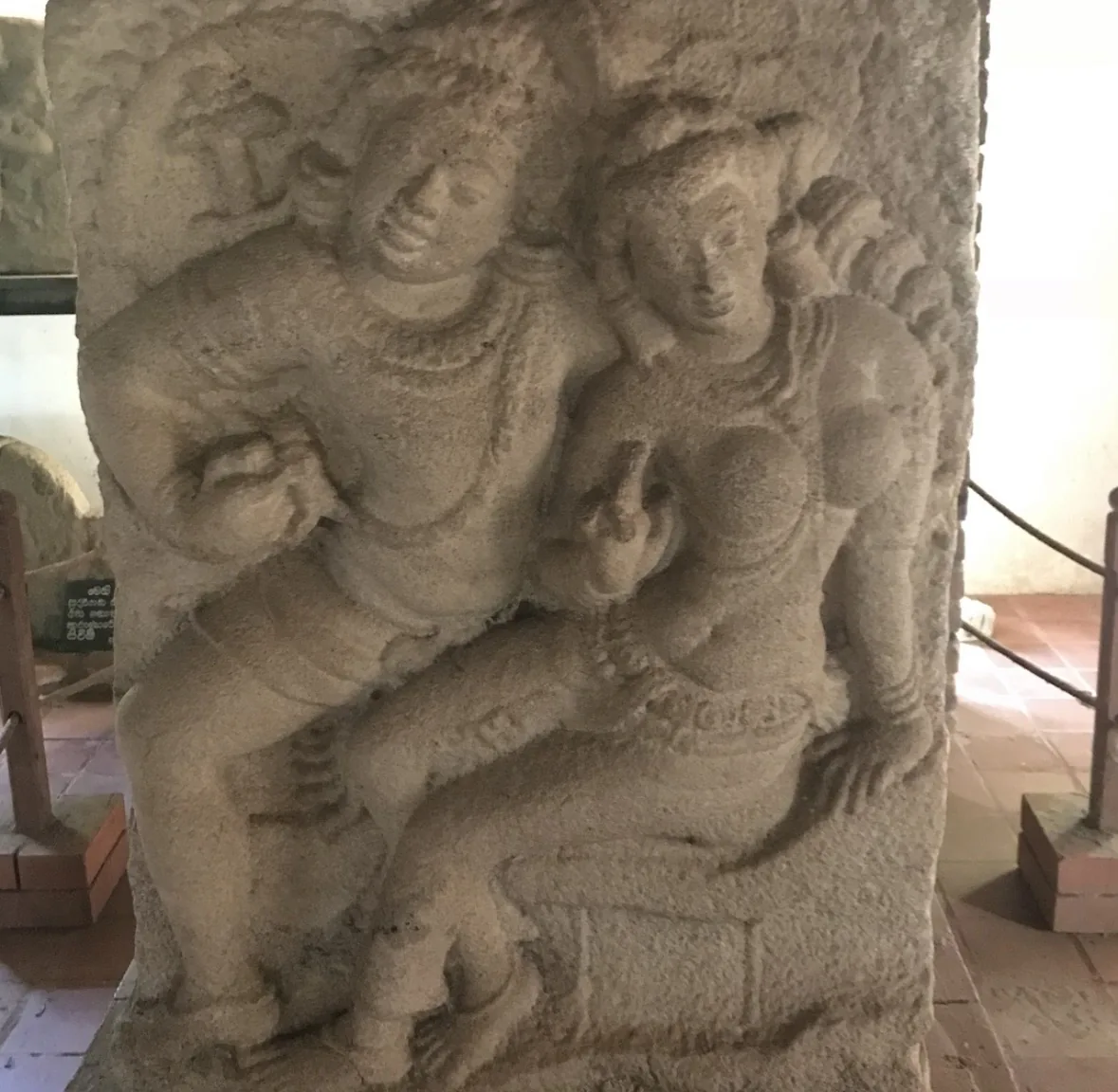
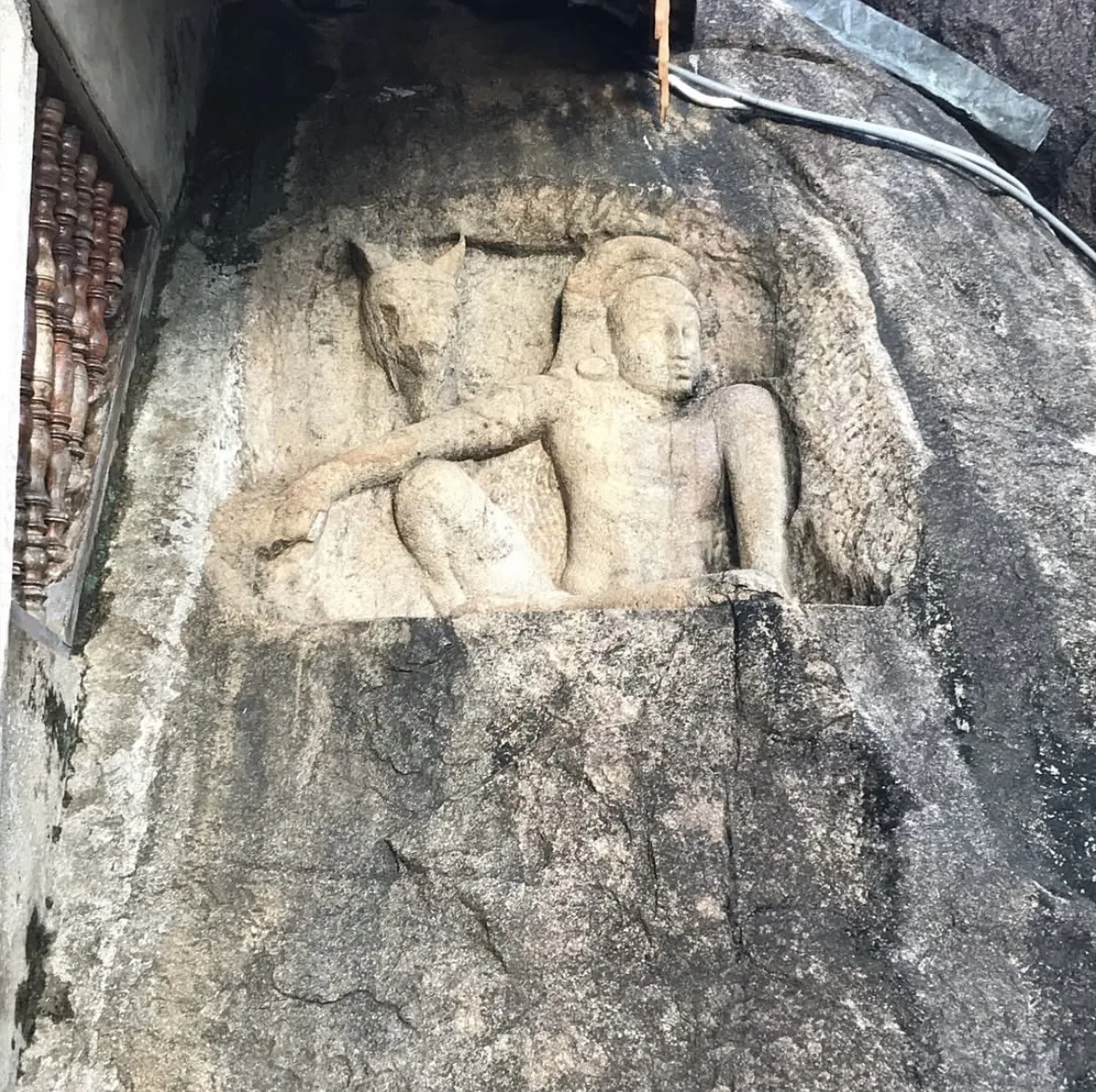
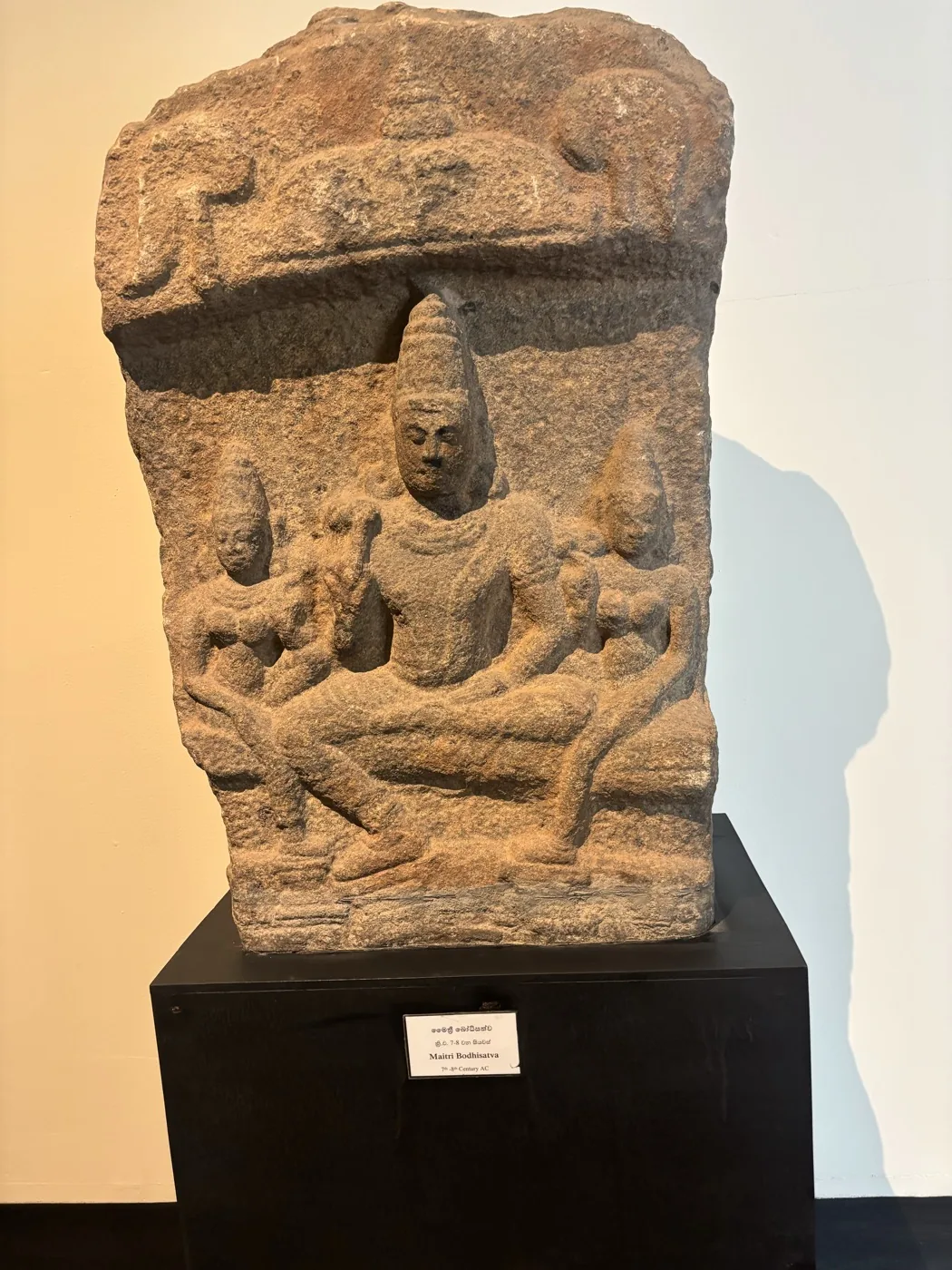
The image-makers of Anuradhapura worked, like its painters, without leaving their names, and within a canon of proportion handed down in the craft. They worked, too, against the grain of their own country, for the stone the island gave them was granite and gneiss, hard and close-grained, with none of the soft sandstone or marble that let the Indian workshops cut freely; through the early centuries the output of stone sculpture was accordingly thin, and it was the coming of steel tools, about the fifth century, that opened the hard rock to the chisel and let the carving multiply. Their masterpiece is the Samadhi Buddha, a little over two metres of dolomite seated in the posture of deep meditation, the hands laid one upon the other in the lap, the eyes lowered to a gaze turned wholly inward. The power of the image lies in its restraint, the face composed to the edge of expression and no further, and it carries the mark of the Amaravati and Gupta schools of India from which the island’s early Buddha images grew. A photograph of it kept Jawaharlal Nehru company through his years in a British jail. Close by, at the rock temple of Isurumuniya, the carvers left a group of reliefs of a very different temper, worldly and tender where the Samadhi Buddha is austere: a man and a rearing horse, a seated royal family, and above all the pair known as the Lovers, a man and a woman leaning close, worked with a softness that the Gupta and Pallava art of the mainland taught but that is wholly the island’s own in feeling.
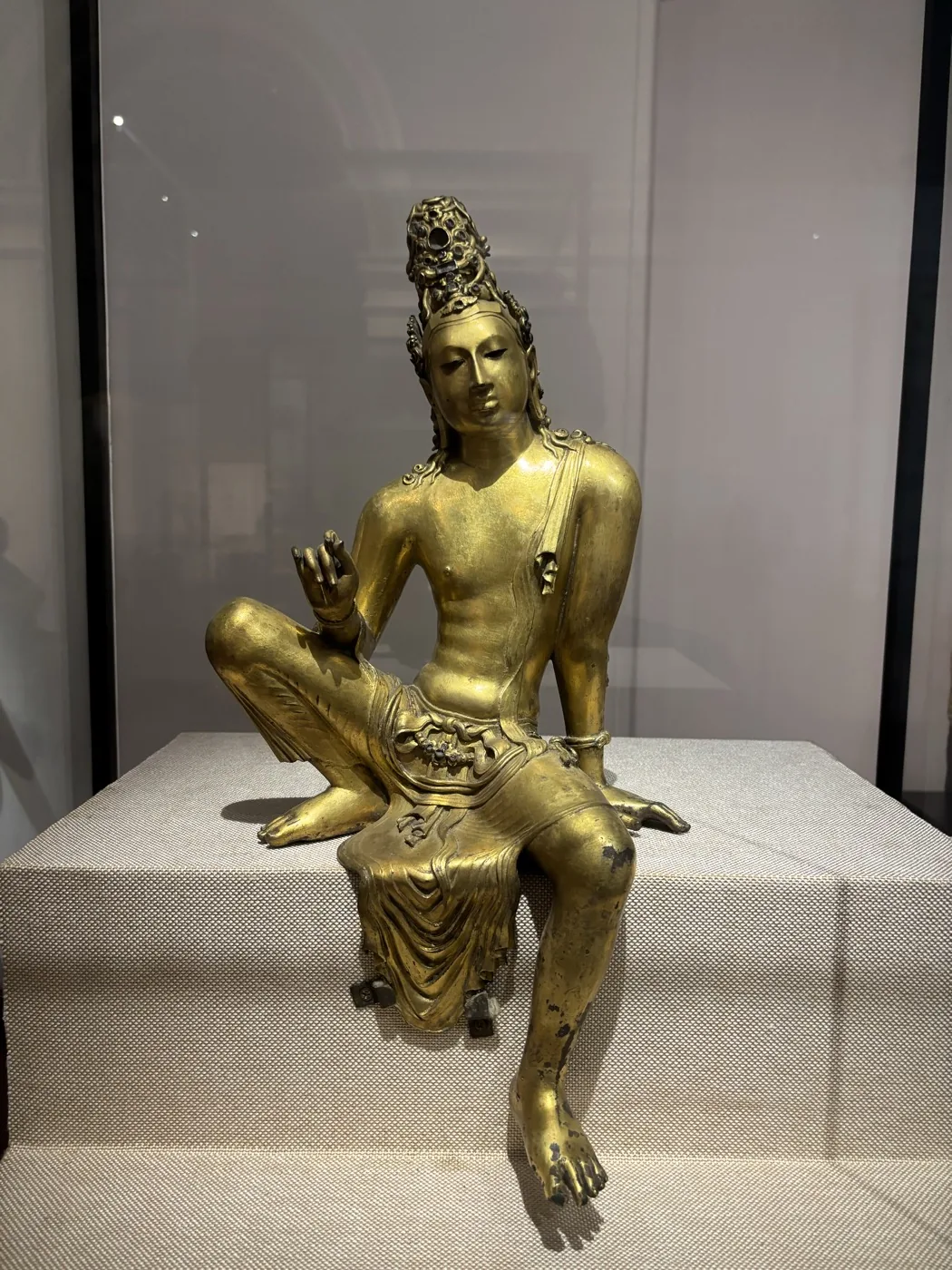
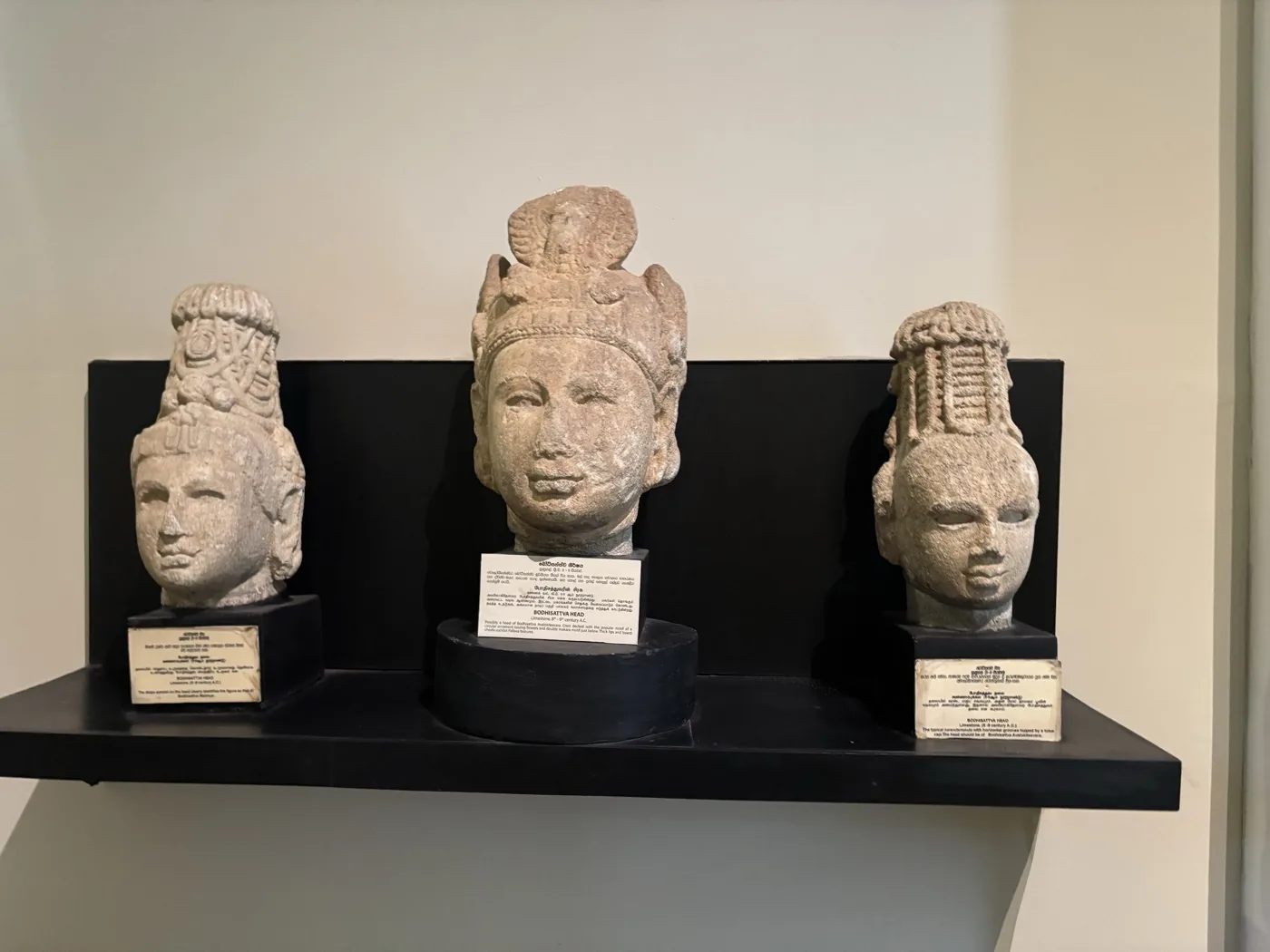
Beside the stone the city cast in bronze, and its bronzes are among the finest the island produced. From the Mahayana current of the Abhayagiri came images of the compassionate Bodhisattvas, the Avalokitesvara found at Veheragala and the gilt figure of the goddess Tara from the Trincomalee coast, near two metres tall and now in the British Museum, a solid casting whose serene fullness ranks it among the masterpieces of Asian metalwork.
The stone at the threshold
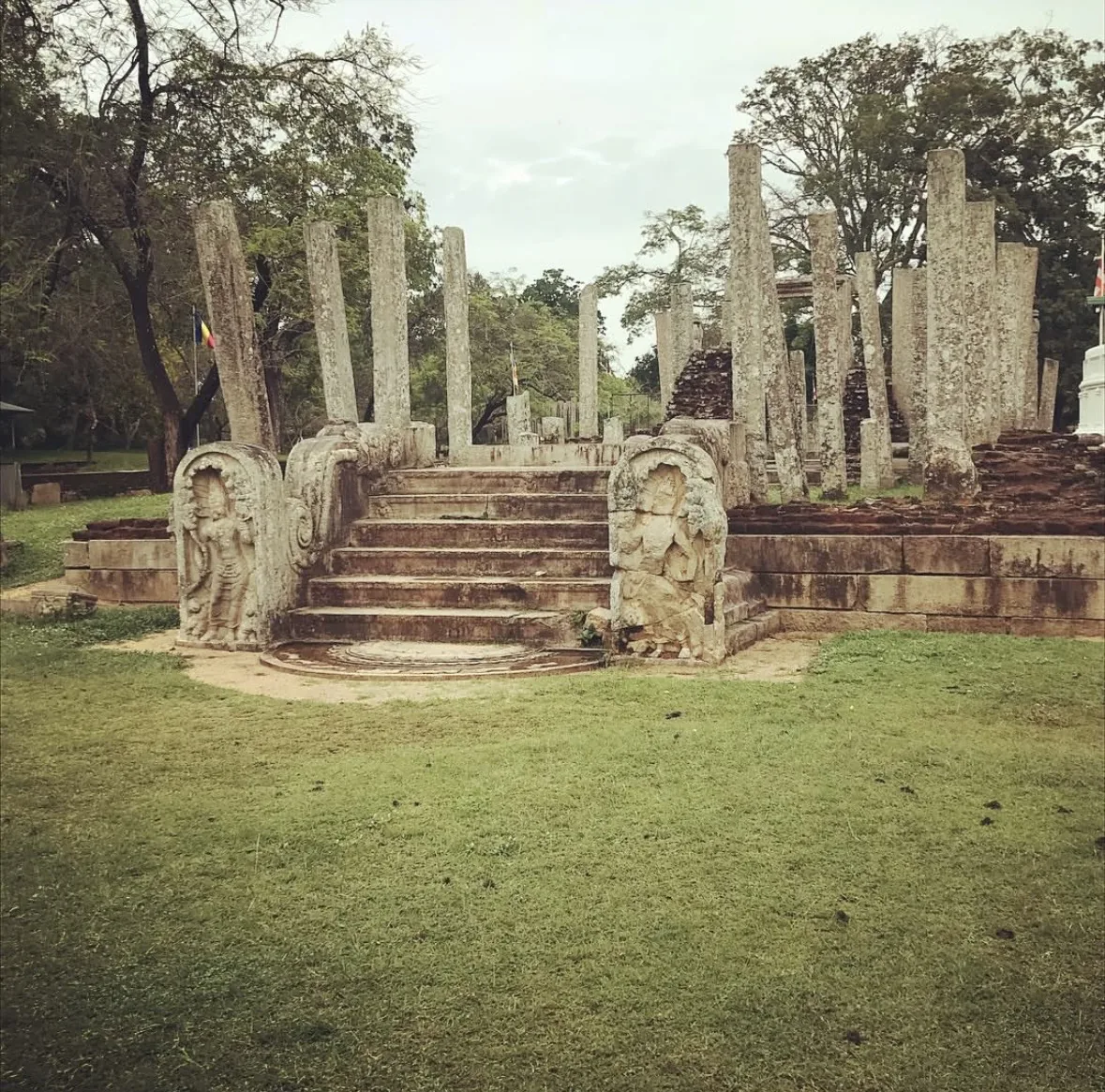
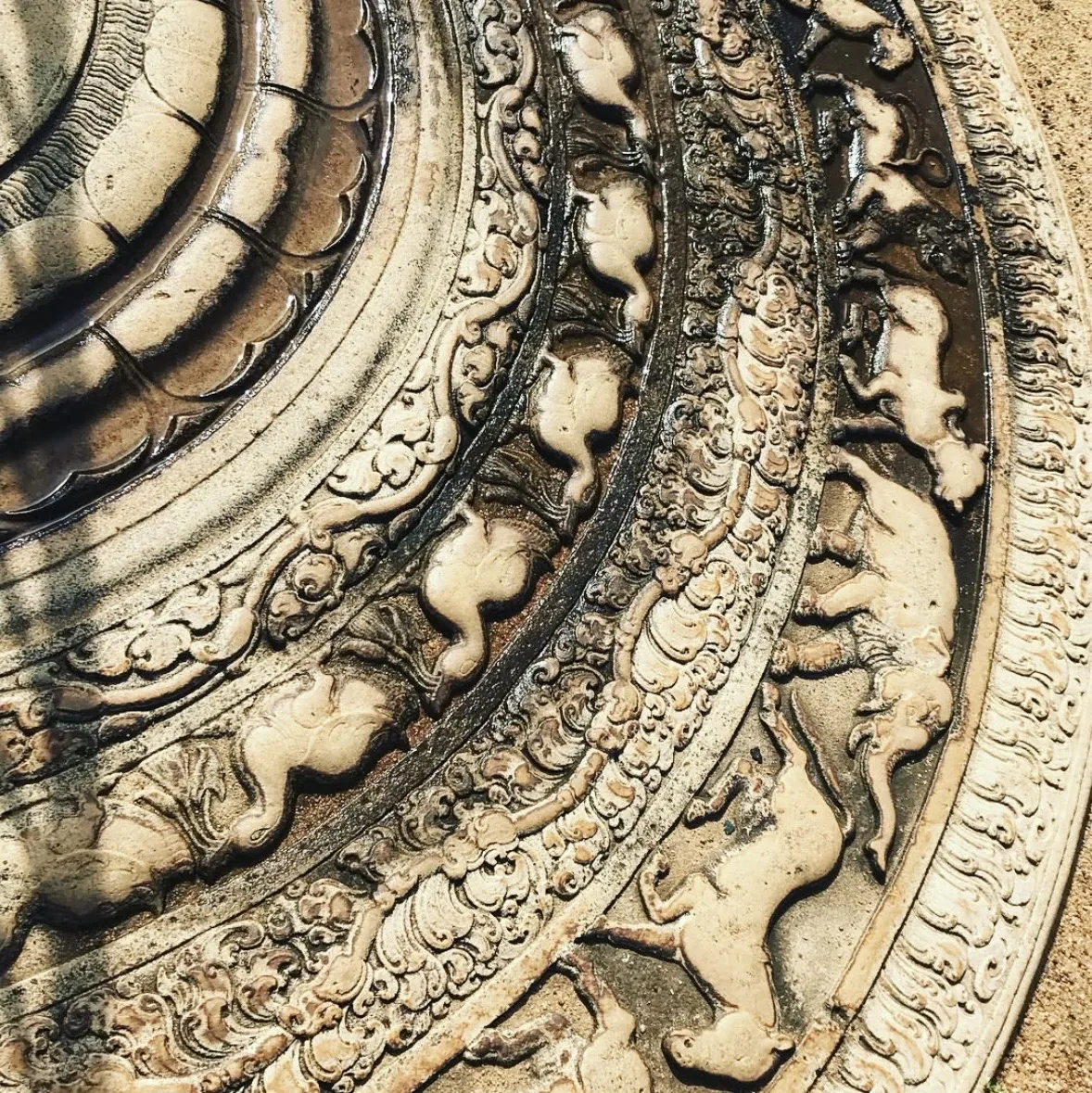
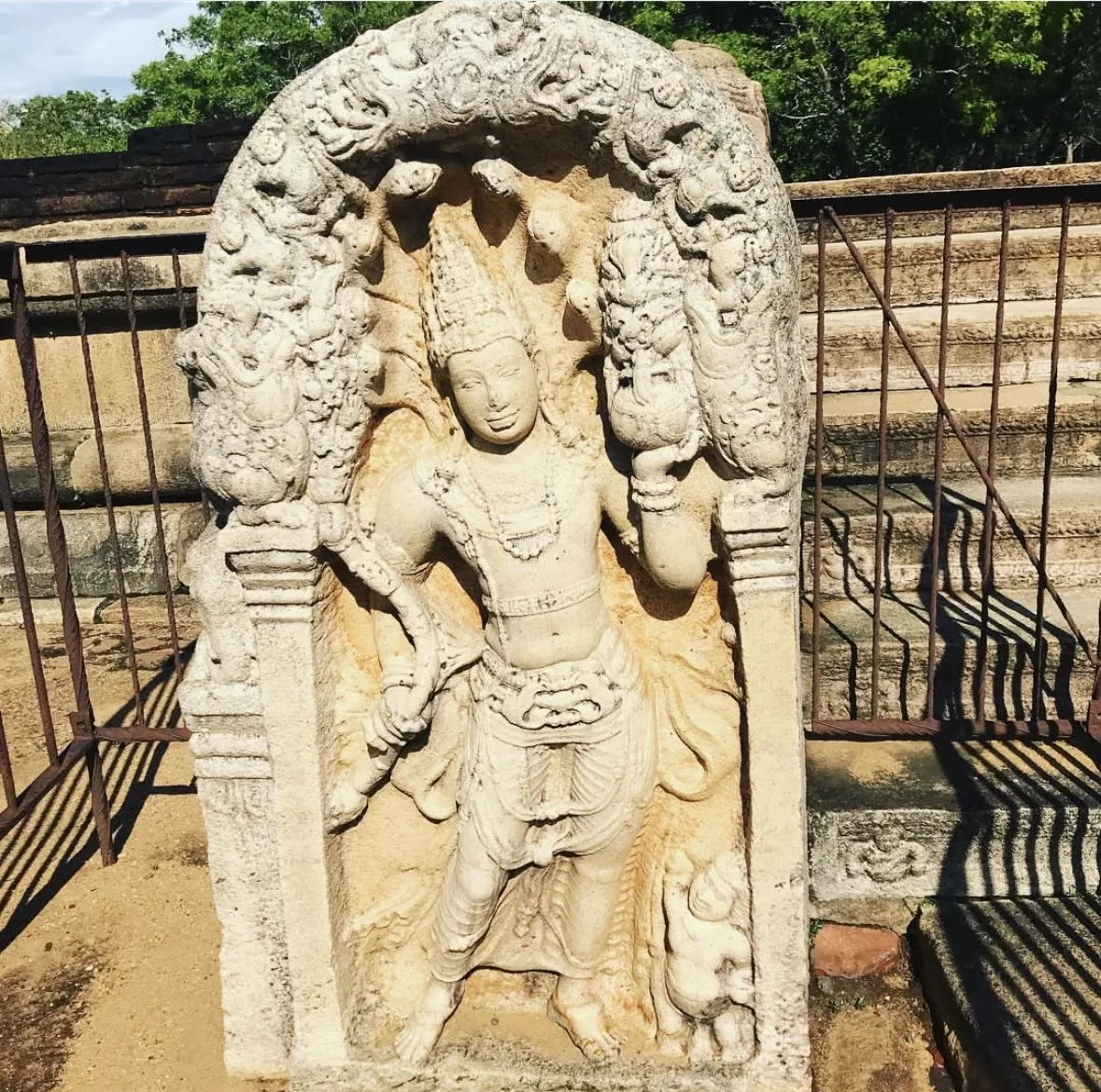
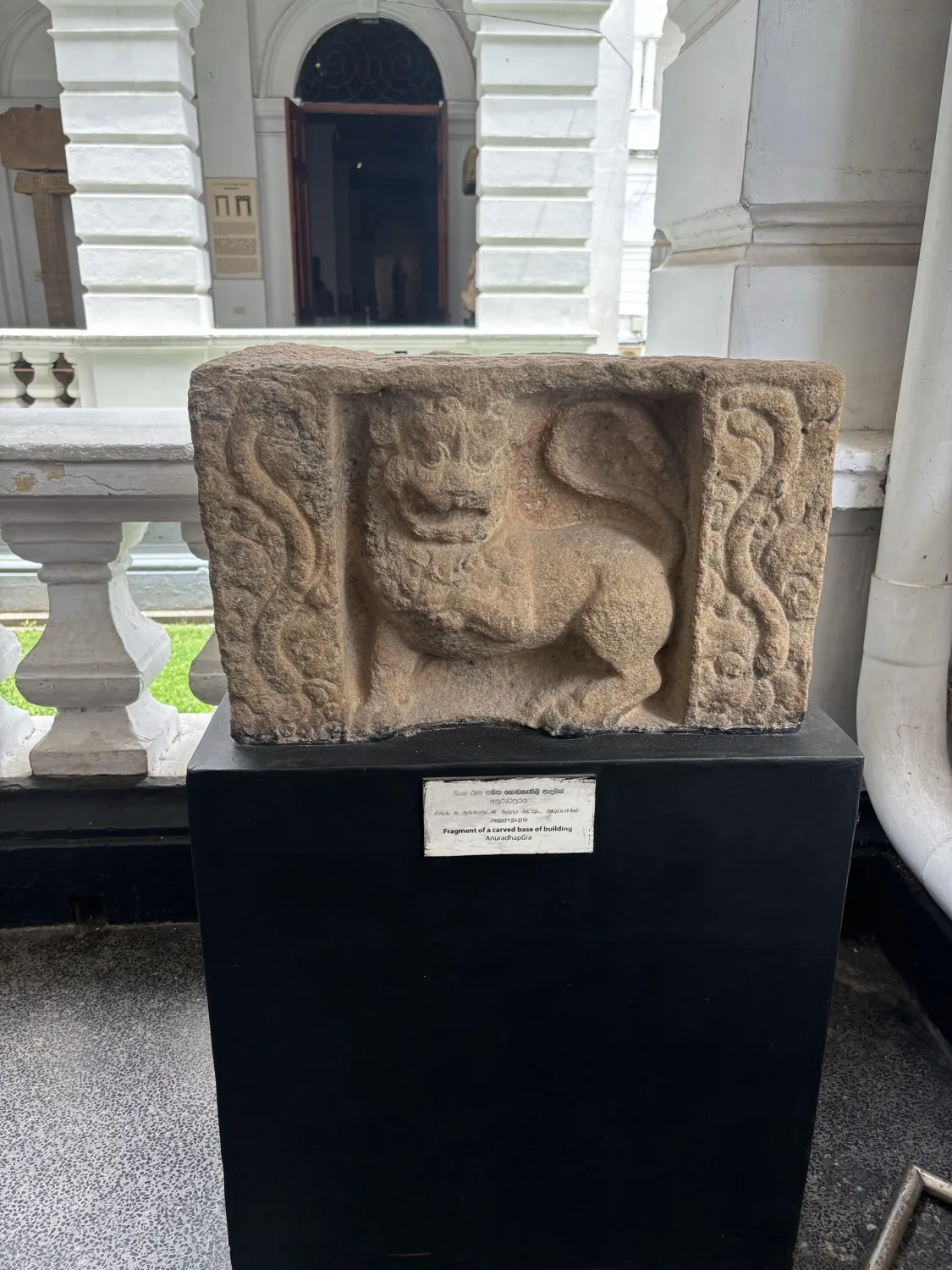
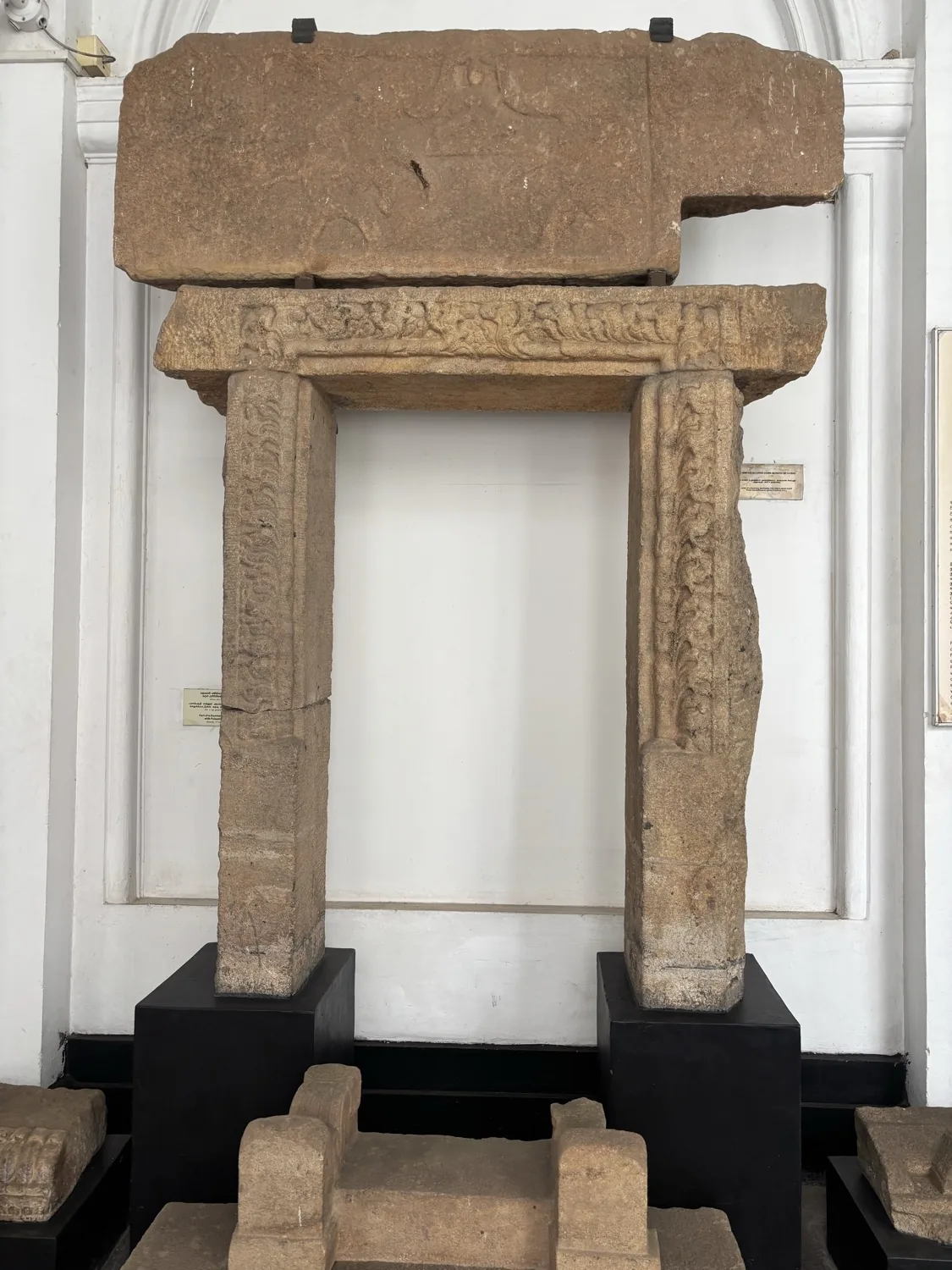
The decorative stone of Anuradhapura is an art in itself, and nowhere more than at the doorway of a shrine. There the Sinhalese laid the sandakada pahana, the moonstone, a half-circle of carved stone worked in concentric bands: a ring of flame, a procession of four animals, a band of scrolling creeper, a file of sacred geese, and at the centre a half-open lotus. At Anuradhapura the four animals were the elephant, the horse, the lion and the bull, read by some as the perils of birth, age, sickness and death that the worshipper stepped over on the way in; the bull, later dropped at Polonnaruwa under the pressure of Hindu feeling, still runs in the Anuradhapura ring. Flanking the steps above the moonstone stood the guardstones, carved with the nagaraja, the cobra-king, or with the guardians of plenty, and the balustrades ended in the makara; among them crouch the gana, the potbellied dwarfs who bend to carry a step or a wall, cheerful hunched figures linked to Kubera, the god of wealth, whose origin the tradition never quite explains. The very threshold of a shrine was a composed work of sculpture before the worshipper had passed within.
The end and the return
The long rule of Anuradhapura ended at the turn of the eleventh century, when the Chola empire of southern India invaded, carried off the reigning king Mahinda V, and governed the island for a time from Polonnaruwa, lower down the river system and easier to hold. When the Sinhalese won the island back they kept the new capital, and Anuradhapura was left to the forest. For centuries the great stupas stood as overgrown hills, their identity half forgotten, until the British antiquarians and then the Archaeological Survey of Ceylon began, in the nineteenth century, to clear and record them.
Sources
- Stadtner, Donald M. Sacred Sites of Sri Lanka. Bangkok: River Books.
- Paranavitana, Senarath. Art of the Ancient Sinhalese. Colombo: Lake House, 1971.
- Ponnamperuma, Senani. The Story of Anuradhapura. Melbourne: Panique, 2013.
- Coomaraswamy, Ananda K. Mediaeval Sinhalese Art. 1908.
- Bandaranayake, Senake. Sinhalese Monastic Architecture: The Viharas of Anuradhapura. Leiden: Brill, 1974.
- von Schroeder, Ulrich. Buddhist Sculptures of Sri Lanka. Hong Kong: Visual Dharma, 1990.
- National Museum of Colombo, period galleries (Anuradhapura panels).
- UNESCO World Heritage Centre. ‘Sacred City of Anuradhapura’ (inscribed 1982). https://whc.unesco.org/en/list/200/
How to cite this essay
Malaka Talwatte, “The Art and Architecture of Anuradhapura,” Malaka Talwatte: Sri Lankan Art and Ceylon Antiquaria, https://malakatalwatte.pages.dev/publications/anuradhapura/.
Quote and cite freely with attribution; please do not republish a whole essay, or a photograph, without permission.