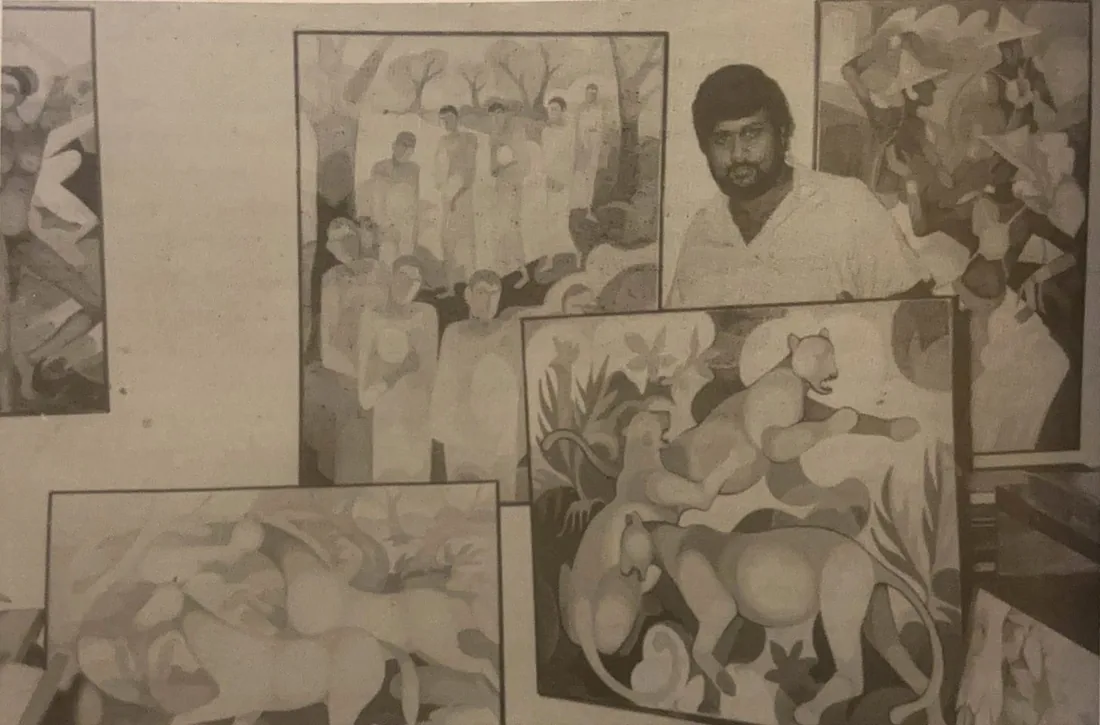
Senaka Senanayake is a national treasure. His contribution to visual art over seven decades is unparalleled among all living Sri Lankan artists. Today, he is not only revered in his native country but also admired across South Asia and around the world. Senaka was born in 1951 into a politically prominent family, his grandfather was D. C. Senanayake, the eldest brother of D. S. Senanayake, Sri Lanka’s first Prime Minister. His artistic inclinations surfaced early. Both his mother and maternal grandmother dabbled in painting, though only as a hobby. His exceptional talent was first recognised by Mrs. Sugathapala, his teacher at Royal College, when six-year-old Senaka painted a mural of the Perahera entirely on his own. His mother was called to the school and her son’s incredible talent was revealed. Encouraged to pursue his gift freely, Senaka produced hundreds of paintings in his early years.
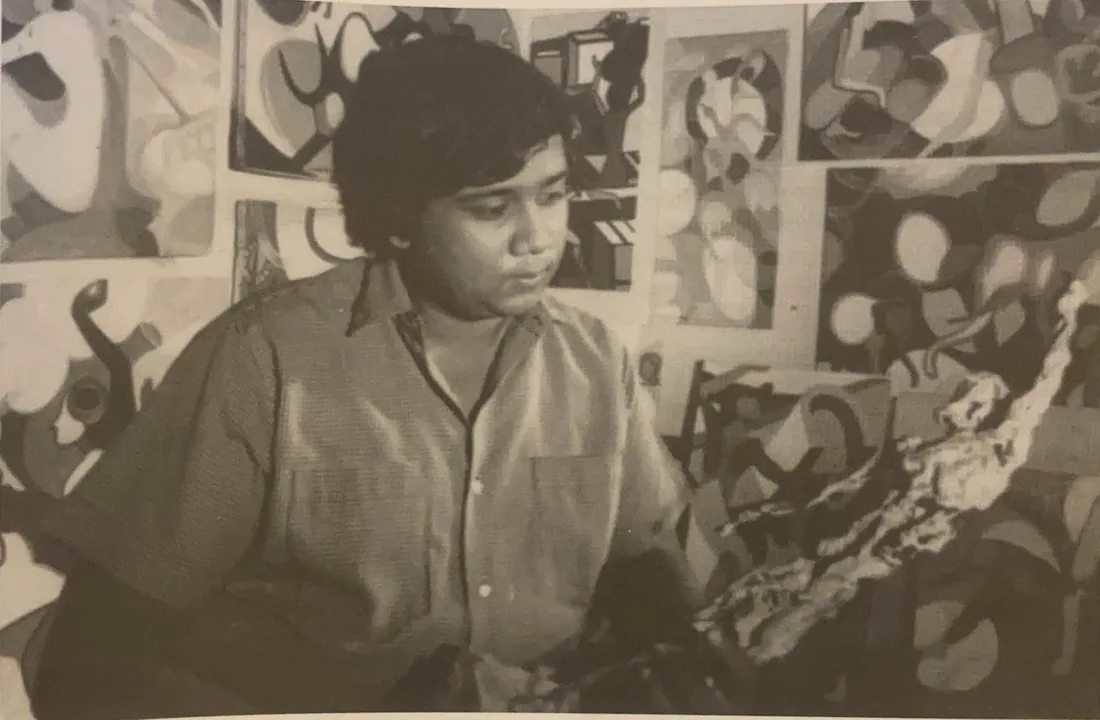
His parents sought the opinion of family friend L. P. Goonethilake, a journalist, art critic, and then Honorary Secretary of the Ceylon Society of Arts. Goonethilake was so impressed by Senaka’s work that he presented it to the Society’s Board, which included legendary artists of yesteryear such as Mudliyar A. C. G. S. Amarasekera, George Keyt, and David Paynter. Unanimously, the Board agreed to host an exhibition of eight-year-old Senaka’s work at the Art Gallery, a first for a child in Sri Lanka. The exhibition opened on March 25, 1959, and drew significant public attention. Goonethilake became a key mentor in Senaka’s early years. His advice to the family, that Senaka should be allowed to develop his style naturally without formal tutoring, played a crucial role in nurturing the artist’s originality. Goonethilake also promoted Senaka’s work abroad to various critics and connoisseurs, once showing colour transparencies to the renowned British critic Sir Herbert Read, who responded: “This is an amazing case of artistic precocity. There have been a few similar cases in the past, but they are very rare in the history of art. There is no easy explanation for such talent, which is really something of a mystery. The boy’s work is highly stylized and sophisticated, with brilliance of colour, rhythm, and composition.” Later, at Royal College, Senaka’s talent was further encouraged as he took up Art for his G.C.E. Ordinary Level exams. His art teacher, Mr. Emmanuel Fernando, chose not to alter Senaka’s natural style. He further encouraged him to take sculpture classes, another medium in which Senaka thrived.
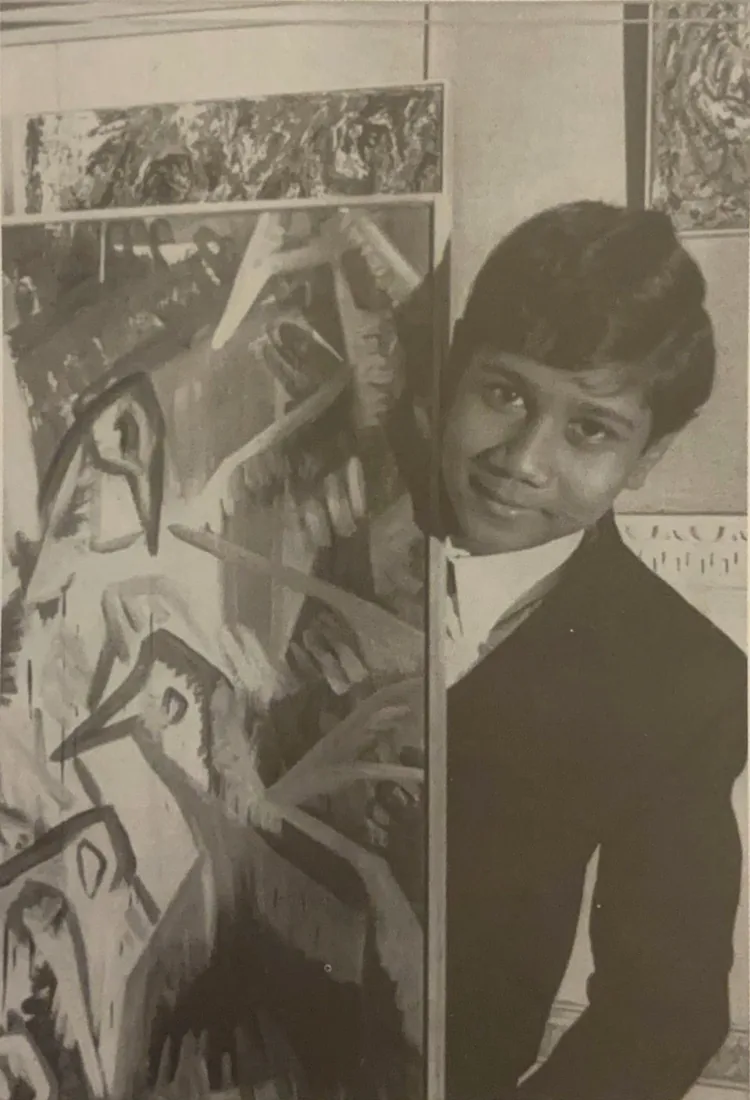
In 1959, during a visit to Sri Lanka, Mr. Oliver Weerasinghe, then working at the United Nations, made a short film on young Senaka. This film stirred interest in the United States. Following this, Dr. Abraham Kalusner organized an exhibition of Senaka’s work for a UNESCO-sponsored Festival of Arts in Yonkers, New York, and David Fleet arranged another at the Fine Arts Gallery in San Diego, California. Both exhibitions were resounding successes, attracting thousands of visitors and considerable media coverage. Soon after, the U.S. State Department sponsored a series of exhibitions across the Midwest. Senaka’s work was also showcased in Germany, where one of his pieces was selected for an exhibition featuring the Commonwealth’s leading artists, inaugurated by Queen Elizabeth II. By age ten, Senaka was an international sensation. Invitations poured in from around the world. His charm and eloquence also made him a media favourite.
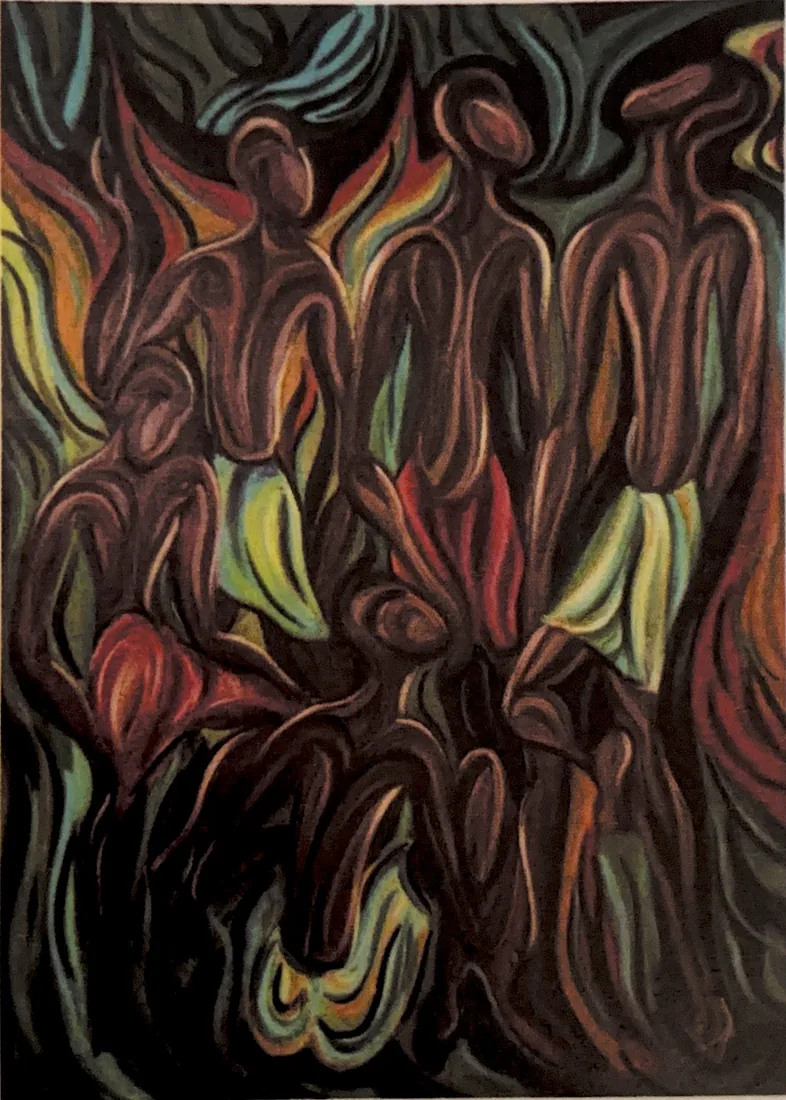
In 1966, he was invited by Indian Prime Minister Indira Gandhi to hold exhibitions in New Delhi, Mumbai, and Chennai, deepening his connection with a country that would later play a central role in his life and career. Among his many early accomplishments, Senaka’s painting Rambutan Vendors was purchased by Australian Prime Minister Sir Robert Menzies for The Lodge in Canberra. He was also commissioned by the United Nations to create the mural Rice Growers for its main assembly hall. He painted a large-scale piece for Sri Lanka’s pavilion at Expo ‘67 in Montreal, which was presented by the Government of Ceylon to Canada as a centennial gift. Remarkably, despite his rising fame and busy schedule, Senaka balanced his artistic pursuits with academics and sports. He captained the Royal College Under-14 cricket team and maintained excellent grades. During a visit to Senaka’s studio, Donald McClelland, a curator at the Smithsonian Institution, suggested he apply for a scholarship to study at an American university.
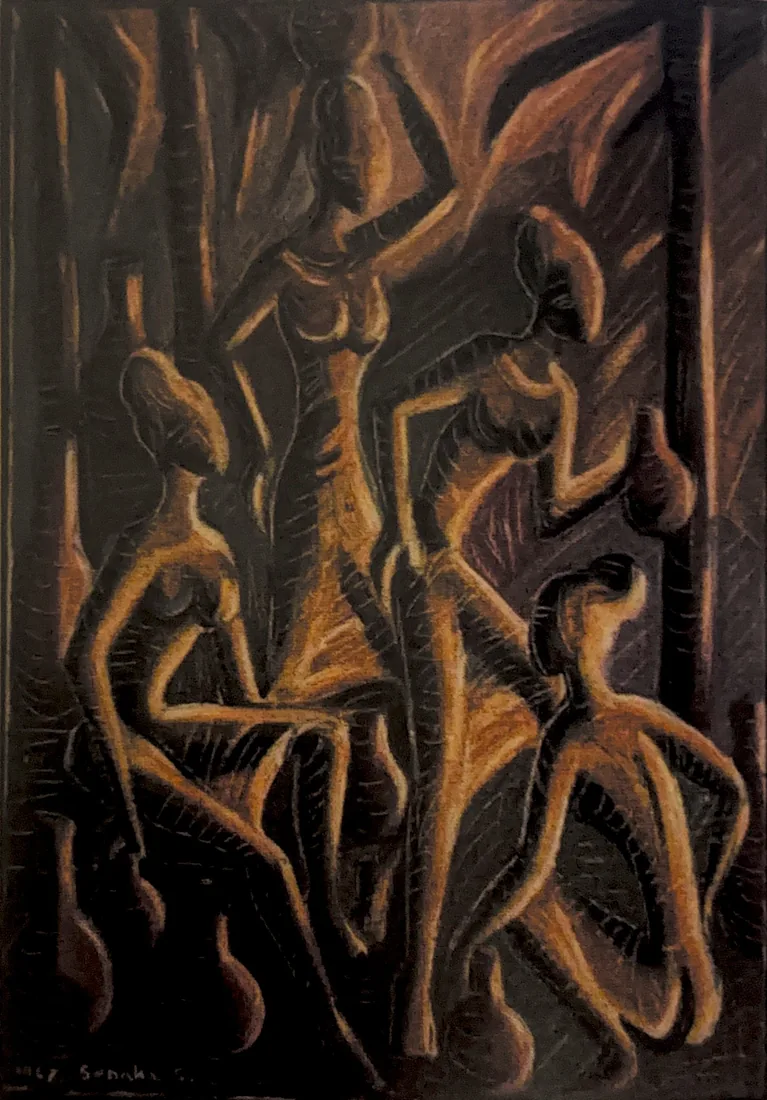
Senaka applied to both Yale and Princeton and was accepted by both with full scholarships. He chose Yale, becoming the first Sri Lankan to pursue an undergraduate degree there. Though Senaka had received training in sculpture, as previously mentioned, he had not been formally trained in any other form of visual art until his time at Yale. His time there was one of experimentation and learning, as he explored new forms of visual art under the guidance of accomplished teachers. Recognizing his unique ability, Yale even provided him with his own studio space. He was inspired by modernists like Jackson Pollock, and while stylistic echoes of these influences appeared in his work, his themes remained rooted in Sri Lankan identity. This period was transformative. Senaka lived independently for the first time and immersed himself in university life, politics, student movements, and even captained the Yale cricket team. He also studied a range of subjects beyond art, including mathematics, anthropology, and political science. These experiences broadened his worldview and brought greater depth to his art. Despite a demanding schedule, Senaka consistently exhibited his work internationally.
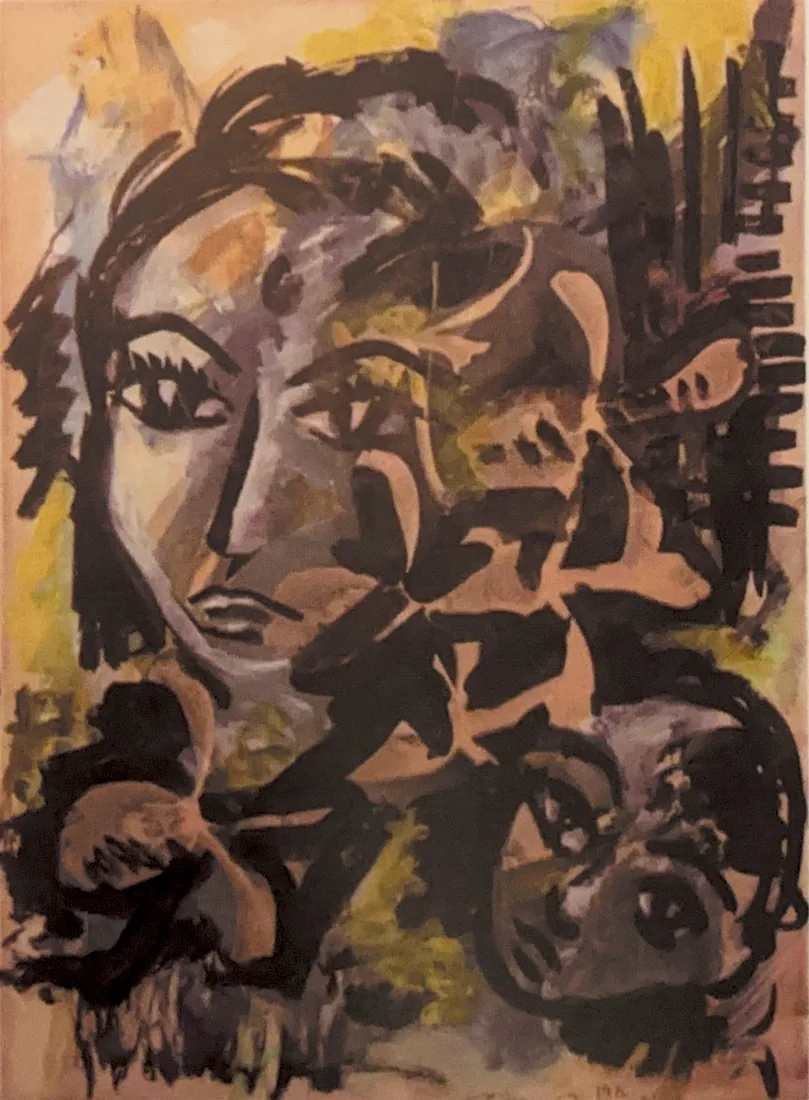
While still at Yale, he was invited to an exhibition in Ottawa jointly organized by the Sri Lankan Embassy and the Canadian government to mark 21 years of Sri Lanka’s independence. The Ottawa Citizen praised the exhibition: “From the depths of an Ottawa winter, the paintings of 17-year-old Senaka Senanayake reopen doors almost forgotten. Blazing colour, amazingly sure, beautiful lines, and a pure joy in working made his exhibition at the National Library Gallery, Ottawa, something to be relished. Said to be completely untutored, Senaka Senanayake stands as a bold testimony to the oft-heard adage beloved by so many art teachers that ‘Art cannot be taught.’ Admittedly, a student of Senanayake’s capabilities and potential would be an extremely rare addition to anyone’s art class, and the fact remains that here, untouched, is a young painter whose work shows a freedom of concept and execution unmarred by any outside help or influence. In a tapestry of handsome Sinhalese girls, stealthy deer, and tall verdant forests, Senaka Senanayake expresses himself with forceful maturity which, combined with the conviction and vivacity of youth, creates a work of remarkable talent. Throughout the exhibition, his absorption with line and composition is clearly seen. In White Tigers, thrashing sinuous ‘S’ shapes, barely contained by their frame, weave an intricate design of limbs and bodies which, in their movement and character, contain the essence of wildness and savagery.”
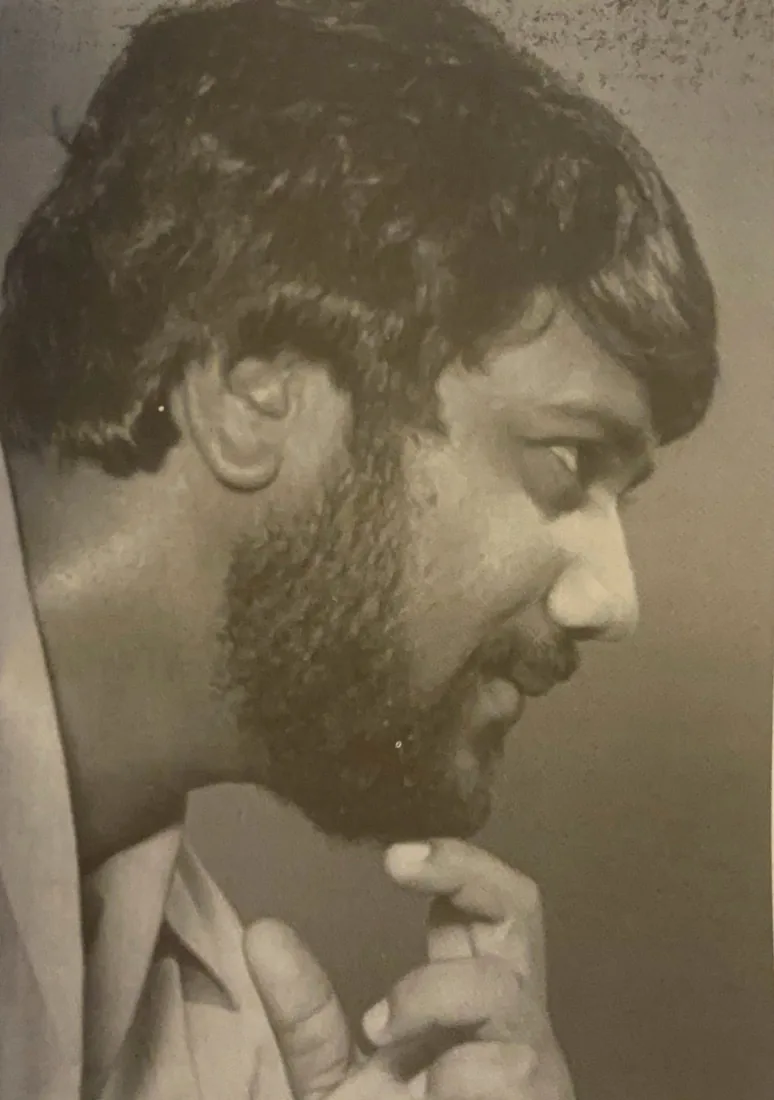
Senaka graduated from Yale in 1972 with an Honours Degree in Fine Arts and a minor in Political Science. Although he was offered the chance to pursue postgraduate studies at Cambridge University in the UK, he chose to return to Sri Lanka, motivated in part by a desire to pursue his career as an artist, but mainly by his love for Jennifer Hamer, whom he had met during his holidays. Jennifer went on to become his wife, soulmate, and greatest supporter in all aspects of his life. Married in 1975, they had two children: Suren and Sharika. Back home, Senaka’s career flourished, with numerous commissions for institutions, banks, and public buildings in Sri Lanka. Among the most prominent was a mural for the new Sri Lankan Parliament at Sri Jayewardenepura Kotte, designed by the iconic Geoffrey Bawa and funded by the Japanese government. Senaka also gained popularity in Japan and South Korea during this period. In Japan, his works graced the boardrooms of leading corporations like Panasonic. In South Korea, prominent companies such as Daewoo displayed his art in the offices of their top executives. He was also featured in major art publications in both countries.
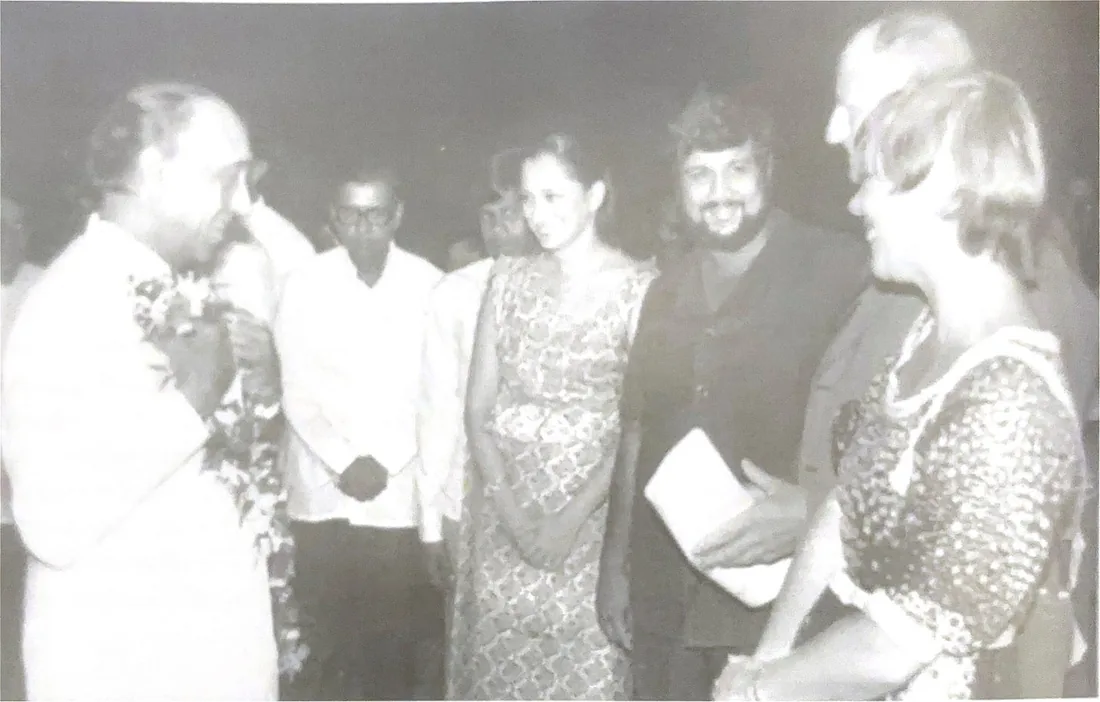
When Japan’s financial crisis struck in the early 1990s, triggering the collapse of the asset price bubble and leading to an extended period of economic contraction known as the “Lost Decade,” Senaka shifted his focus to India, following an invitation from his longtime friend and collector Preetha Reddy of the Apollo Hospitals Group. This marked the beginning of a new chapter in his artistic journey. Building on his early success, he began exhibiting widely across India, gaining devoted followers and developing a deep affection for the country and its people. Senaka recalls how welcoming the Indian art community was: “They saw me as a young artist from Sri Lanka trying to find his place, and they encouraged me wholeheartedly. I never felt like an outsider. They embraced me as one of their own.”
Travelling around India and participating in exhibitions, Senaka built strong friendships with Indian art legends including Anjolie Ela Menon, S. H. Raza, Jehangir Sabavala, Paresh Maity, Sakti Burman, Satish Gujral, and M. F. Husain. At times, he even exhibited alongside them. “They were never jealous or territorial,” Senaka says. “They were just always very supportive.” He fondly recalls hosting Anjolie Ela Menon and her husband Raja Menon, at his house in Galle Fort. Gazing out over the Indian Ocean, Raja, a former Admiral of the Indian Navy and a submarine specialist, remarked that seeing the lighthouse from land was a full-circle moment for him: “I’ve seen this structure so many times from the sea, now, finally, I’m looking at it from the land.”
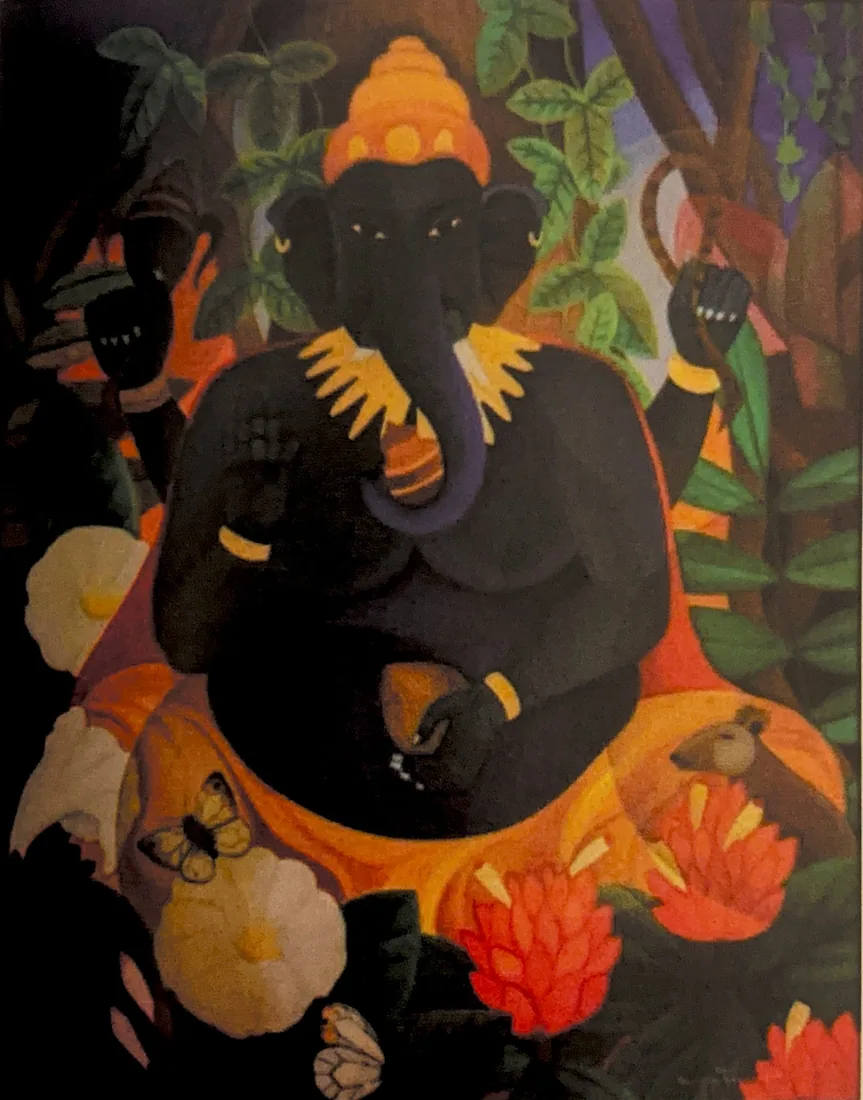
Senaka also fondly remembers being invited to Jehangir Sabavala’s home in Mumbai. He enjoyed a memorable Parsi meal prepared by Sabavala’s wife, followed by a visit to the artist’s studio. There, Sabavala demonstrated how he meticulously mixed his paints with great precision, calculating the exact amount needed for each section of the canvas, something that left a lasting impression on Senaka. Sabavala explained: “When I come in the next day, I don’t want to mix again. I want the same shade.” It was a reflection of his remarkable discipline. When asked if he followed a similar method, Senaka remarked: “When I work, I like to experiment with colours and arrive at similar shades, so this was quite different from my process.” Sabavala also visited Sri Lanka and spent time with Senaka during his trips.
Maqbool Fida Husain (M. F. Husain) was another Indian great with whom Senaka shared a strong rapport. Unfortunately, after sparking controversy in India, where he was accused by some of offending religious sentiments through ‘obscene’ depictions of deities, Husain found himself unable to return to the country. Senaka reflects: “It was a sad situation for such a great artist. And it shows how volatile the art world can be, how a single image, taken out of context, can change a life. Yet, despite everything, Husain remained generous, humorous, and brilliant. He was of course sad that he couldn’t go back to India, because he absolutely loved India.” Husain subsequently moved between London and Dubai before ultimately receiving Qatari citizenship. Reflecting on Husain’s painting technique, which he had witnessed firsthand, Senaka says: “He would spread a canvas out on the ground and just start painting, sitting right there on the floor. There was a raw energy to the way he worked, very spontaneous.” Senaka fondly recalls meeting Husain in Dubai, where the artist had invited him for a ride in his new car. To his surprise, when they stepped outside, a sleek yet compact Ferrari awaited them, with a chauffeur in white gloves and a formal hat standing next to it. “I was a bit puzzled,” Senaka recalls. “There were only two seats, and the car was incredibly low. I wondered how I’d ever get out, once I got in! Eventually, Husain, barefoot, squeezed himself into a cramped backseat, which wasn’t really a proper seat at all, while I rode up front with the chauffeur. It was quite a ride!” Husain took him to one of his son’s beautiful homes in Dubai, where, ironically, the Ferrari was parked in the garden so that Husain could see it from his bedroom window. In the living room hung a striking self-portrait of Husain, styled glamorously like James Bond, complete with a gun. The image was enormous, dominating the entire space. “That moment really captured his personality,” says Senaka, “larger than life.”
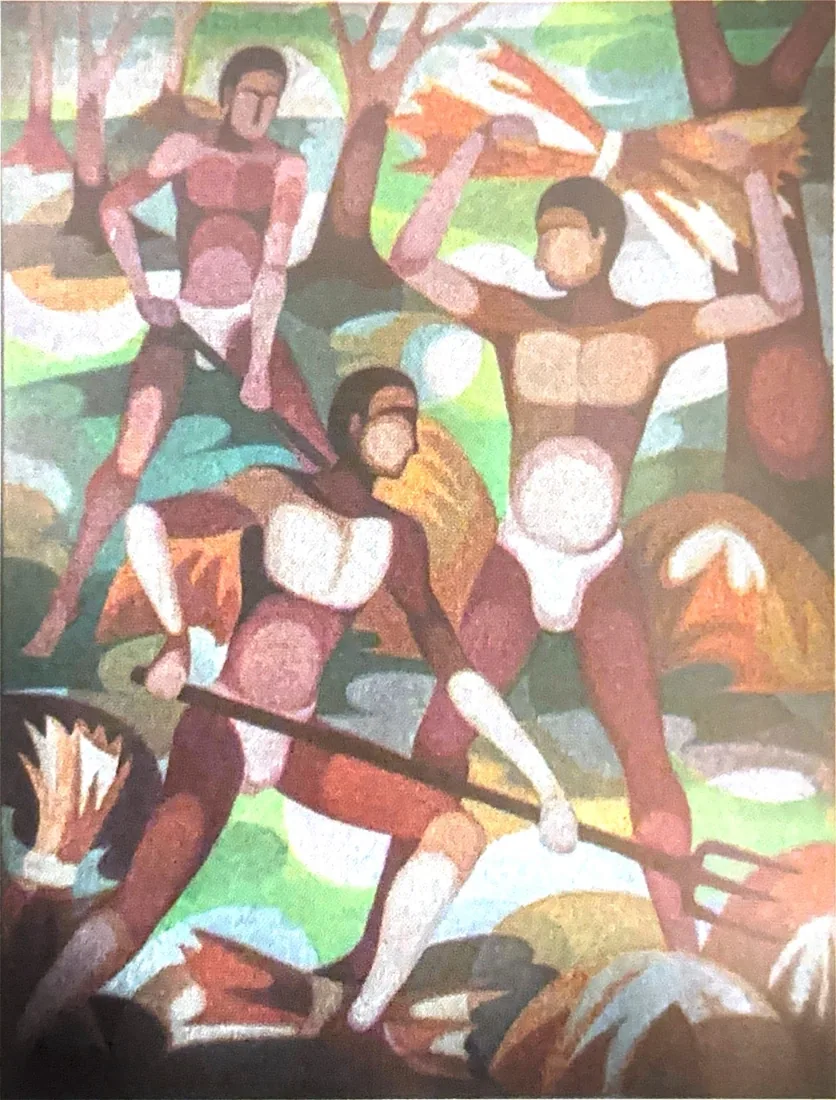
It was during his time in India that Senaka also experienced immense spiritual growth. He learned about Hinduism, gradually gaining a deeper understanding and respect for the faith. Although he had completed an entire series of Lord Buddha paintings in his younger years, it was only after his regular visits to India and his growing appreciation for Hinduism that he began creating Hindu-themed artworks. These too were approached with great care and reverence. “When I’m working on certain paintings, especially those with religious or spiritual themes, I become more introspective,” Senaka explains. “During that time, I switch to a vegetarian diet and listen to bhajans to help me enter the right mindset. It’s almost like a ritual. I immerse myself completely.” Senaka’s rise to even greater prominence in India and on the international stage over the past 10–15 years is now well established. He attributes this growing popularity to a combination of factors, prestigious galleries such as Grosvenor, influential auction houses, and prominent collectors all playing a significant role. Major collectors, including Mukesh Ambani and his family, acquiring Senaka’s work created a ripple effect in India, where demand for his art now far exceeds his capacity to produce it.
In November 2024, Senaka held a highly successful solo exhibition in Mumbai, coinciding with Art Mumbai. The show was attended by India’s top collectors and art critics, and, as expected, was a complete sell-out. Patronage from Indian cricketing legends such as Sachin Tendulkar and Kapil Dev is also a source of immense joy for Senaka. Had he not become an artist, he says, cricket would have been his chosen career. “Sachin couldn’t attend the opening day of my Mumbai exhibition and sent his apologies, but as soon as he returned to the city, he made it a point to visit,” Senaka recalls. “That kind of thoughtfulness really touched me. I remember during the time of the conflict in Sri Lanka, Sachin would call me whenever there was bad news just to check in. People like him are such incredible ambassadors for India,” he says with gratitude.
Senaka’s primary theme in recent years has been rainforests. When asked how this focus came about, he explained: “Living in Sri Lanka, I’ve witnessed firsthand the devastation of our natural resources. Forests are being destroyed, animals displaced, all in the name of profit. Unlike in some countries where trees are replanted after logging, that doesn’t happen here. I asked myself, ‘What can I do? How can I inspire people to be more conscious?’ I’m not a politician or a businessman. I’m an artist. So, I turned to my brush.”
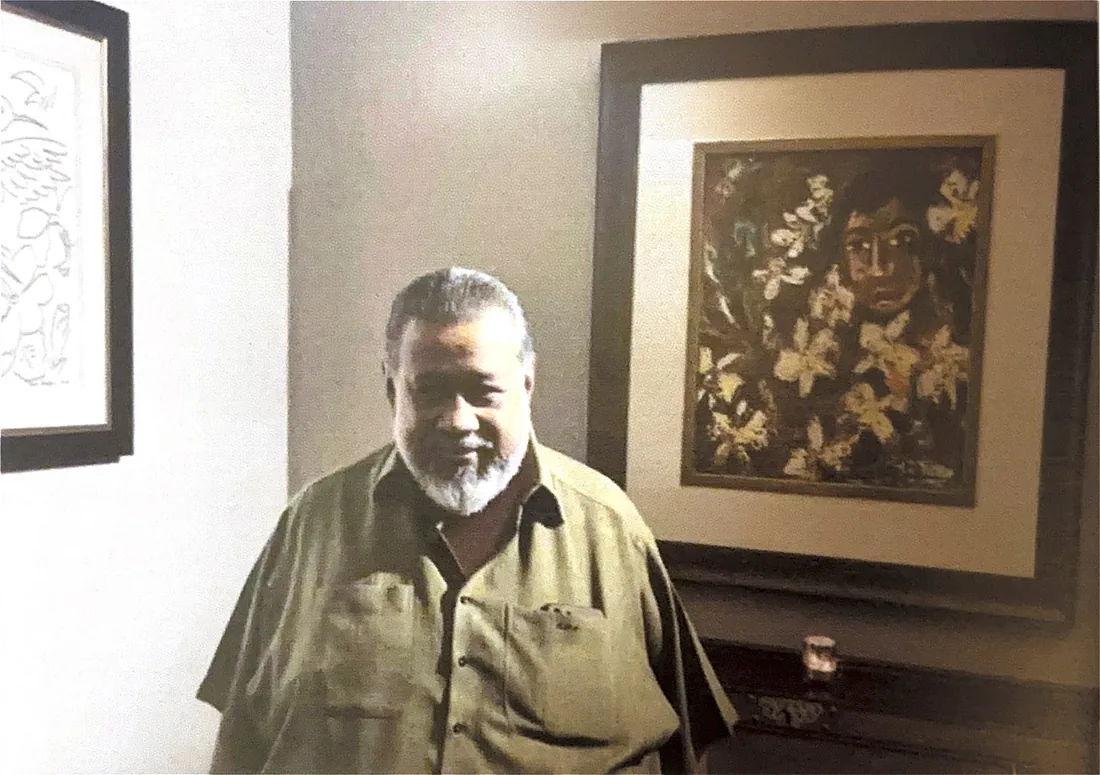
“I especially wanted to inspire the next generation to make a difference. I realized early on that showing destruction, burnt forests and dead animals, wouldn’t move children. Instead, I began painting vibrant, joyful scenes filled with lush jungles, birds, and butterflies. If children see the beauty, they might ask their parents why they don’t see it in real life, and maybe, that question could spark change. Art can open their eyes to nature’s wonders.”
“After a while, I expanded beyond Sri Lankan animals and began researching hummingbirds, parrots, and other species from around the world to include in my work. My thought was that many children in this part of the world might never see these creatures otherwise. Through art, I can introduce them to the beauty of a world worth preserving.”
Technically, Senaka’s evolution as an artist is clearly evident to those who study his body of work, from his earliest pieces to his most recent. Aside from a period of stylistic experimentation during his time at Yale, his artistic journey shows a steady and deliberate progression. While his early paintings were more one-dimensional, his recent work reveals a heightened sense of depth and complexity, often achieved through layered composition. Senaka reflects on this evolution: “It happened organically. Traveling, seeing works in museums, being exposed to different influences, all of it played a role. My early works were very flat. Now my paintings have more layers and more depth. Every artist has their own journey. I often use the concept of the circle, no beginning, no end. Life is a cycle, and that’s reflected in my work. Life goes on.”
He also believes strongly in avoiding creative stagnation: “I don’t like getting stuck in a single style. If I feel bored or uninspired, I move on to something new, new themes, new techniques. Evolution is vital for an artist.” During the author’s most recent visit to Senaka’s studio in Colombo, the artist was preparing works for another major South Asian contemporary art auction in London. His paintings were set to be displayed in the public areas of one of London’s most prestigious addresses. The timing of the auction was intended to coincide with Wimbledon and India’s cricket tour of England. Once again, Senaka’s work would not only reach hundreds of thousands of admirers but also continue his mission to raise awareness about conservation, delivered through the vibrant, captivating lens of his art. “I have great peace of mind when I paint. I have no other distractions,” he says. “That’s thanks to my wonderful wife, my children, their spouses, and my grandchildren. The love and support I receive from them allows me to do what I love.”
History will remember Senaka as a child prodigy who, over the course of his life, made a remarkable impact on the art world. He is a man who brought global attention to Sri Lanka through his exceptional talent and unwavering dedication. By any measure, he is the most successful and sought-after Sri Lankan artist of his generation. When asked how he would like to be remembered, Senaka humbly replies: “As someone who contributed to Sri Lanka’s artistic legacy, who loved his country deeply, and who encouraged young people to respect and protect our environment and our nation.”
References
- 1. Senaka by Nalini Senanayake, 1995.
- 2. Portrait of an artist as a young boy by L. Goonethileke, Times of Ceylon Annual, 1962.
- 3. Portrait of a young man as an artist by Ehsan Sourjah, Ceylon Observer Pictorial, 1973.
- 4. More of Senaka, Times of Ceylon Annual, 1964.
- 5. Senanayake, Senaka (2025). Interview by Malaka Talwatte, Colombo, 7th May,2025.
- 6. https://thefederal.com/category/features/how-india-failed-mf-husain-a-son-of-the-soil-and-one-of-its-greatest-artists-119952
How to cite this essay
Malaka Talwatte, “Brushed by Destiny: Senaka Senanayake’s Seven-Decade Journey in Art,” Malaka Talwatte: Sri Lankan Art and Ceylon Antiquaria, https://malakatalwatte.pages.dev/publications/senaka-senanayake/.
Quote and cite freely with attribution; please do not republish a whole essay, or a photograph, without permission.